
Loading your cart...

A placebo-controlled trial compares a test treatment with an identical-looking treatment that contains none of the test substance, and it is almost always double-blind. An open-label trial is one where people know what is being given, usually both the participants and the researchers. The difference decides how much weight a result can carry, and it is the first thing to check when a label, an ad or a blog post says “studied in humans.” At Mycelia Link we publish third-party Certificates of Analysis and explain what the lab results show instead of making health promises, because a number is only useful when you know how it was produced. Study design works the same way.
TL;DR
- Placebo-controlled: participants are randomly assigned to the test treatment or a look-alike without it, which separates the treatment’s effect from expectations and natural change.
- Open-label: everyone involved knows the assignment. This is useful for long-term follow-up or when blinding is impossible, but results are easier to bias.
- Blinding is a separate dial: single-blind hides assignment from participants, double-blind from participants and investigators, and open-label has no blinding.
- “Open-label” does not mean “uncontrolled”: an open-label trial can still have a comparison group.
- When you read a claim, look for the design first, then the size, then who ran it.
Table of Contents
- What “placebo-controlled” means
- What “open-label” means
- Blinding: single, double, triple
- Placebo-controlled vs open-label: side by side
- Why open-label results are harder to interpret
- What is an open-label placebo?
- How to read a study claim on a product page
- Where we stand
- See the lab results for yourself
- FAQ
- Sources
What “placebo-controlled” means
In a placebo-controlled trial, participants are randomly assigned either to the test treatment or to an identical-appearing treatment that does not contain the test drug. The FDA’s guidance on choosing a control group notes that such trials are almost always double-blind. The NIH describes the same idea plainly: one group gets an inactive drug or other intervention, the other gets the active one, and the comparison shows whether the active treatment does more than the placebo.
The National Center for Complementary and Integrative Health calls the randomized, placebo-controlled trial the “gold standard” for testing interventions in people. It also defines the placebo effect: a beneficial outcome that comes from a person’s anticipation that an intervention will help.
That definition points to something readers often miss. The placebo control does not only account for expectations. According to the FDA’s guidance, it controls for influences on the course of a condition other than the drug’s own action: natural history, regression to the mean (the tendency of unusually high or low measurements to drift back toward average on their own), expectations and the experience of being in a trial. Because of that, the guidance describes it as the design least dependent on outside assumptions.

A simple example
Imagine a study of a new ingredient where 200 volunteers are randomly split in two. One group gets capsules with the ingredient. The other gets capsules that look and taste the same without it. Nobody, including the staff who hand out the bottles and measure outcomes, knows who got which until the data are locked. If the groups end up different, the difference is more likely to come from the ingredient than from hopes, routine or chance.
What “open-label” means
The FDA describes an open-label trial as one that is not completely blinded, typically because subjects and physicians know the assigned treatment. The same guidance stresses that the term does not mean “uncontrolled” or “single arm.” An open-label study can randomize people into groups and compare them. It just does not hide which group is which.
The Multi-Regional Clinical Trials Center of Brigham and Women’s Hospital and Harvard adds why researchers use the design: to learn about long-term effects, when masking is impossible, and in extensions where participants keep sharing data after the main treatment phase. Think of a surgery compared with a medication, or a follow-up where everyone who finished a blinded trial is offered the real treatment and tracked for another year. Hiding the assignment in those cases would be impractical or unethical.
Blinding: single, double, triple
Searches for “double-blind vs single-blind” are far more common than searches for the main comparison, so it helps to separate two ideas that get tangled. A trial can be placebo-controlled or not, and it can be blinded or not. Those are different choices.
A clinical trial design review in the Journal of Experimental Stroke and Translational Medicine lays out the usual vocabulary. “Single-blind” means participants are blinded, “double-blind” means participants and investigators are, and “triple-blind” extends it to the sponsor and assessors. Trials with no blinding are called open-label.
| Design | Who knows the assignment | Typical use |
|---|---|---|
| Open-label | Participants and researchers | Long-term follow-up, surgery or device comparisons, extension phases |
| Single-blind | Researchers know, participants do not | Early testing, or when investigators cannot be masked |
| Double-blind | Neither participants nor investigators know | Standard for showing a treatment works |
| Triple-blind | Also sponsor and outcome assessors do not know | Large or high-stakes trials |
A placebo is one way to make blinding possible. If the comparison group gets nothing at all, participants know they are in it, so the trial becomes open-label by default.
Placebo-controlled vs open-label: side by side
| Question | Placebo-controlled | Open-label |
|---|---|---|
| Is there a comparison group? | Yes, an inactive look-alike | Sometimes, but not always |
| Do participants know what they get? | No, in nearly all cases | Yes |
| Main strength | Isolates the treatment’s own effect | Practical, suits long-term and real-world follow-up |
| Main risk | Can be inappropriate when an effective treatment already exists | Knowledge of assignment can bias behavior, dropout and reporting |
The ethical limit on placebo-controlled trials is real. An academic overview of randomized trials states that they are generally inappropriate and unethical if a treatment that improves outcomes is already available for the condition being studied. That is one reason open-label or active-comparator designs exist at all.
Why open-label results are harder to interpret
When people know what they are receiving, several things change. The FDA’s guidance warns that knowledge of assignment may make participants more or less likely to drop out, which can leave different amounts of missing data in each arm. It also notes that extra medication or stopping treatment could be influenced by what people know. Anyone who rates symptoms by self-report, or whose judgment shapes a score, can be nudged by expectations too.
There is also direct evidence of the size of the problem. A 2017 meta-analysis compared 17 open-label trials and 22 placebo-controlled trials in patients with intellectual disability. It found higher effect sizes in the open-label studies and concluded that certainty of receiving real medication enhanced the placebo component and biased the results. That is one population and one type of treatment, so treat it as an illustration of the mechanism, not a rule for every field.
The FDA’s own training material states the goal in one line: clinical investigations exist to distinguish a drug’s effect from spontaneous change, the placebo effect or biased observation, and blinding is a key tool for limiting bias among subjects, observers and analysts.
How good open-label trials limit bias
When full blinding is not possible, well-run open-label trials add safeguards. The FDA’s open-label guidance lists several:
- Allocation concealment. It should be impossible to know or predict a participant’s assignment before randomization.
- Identical handling. Every arm gets the same visit schedule, adverse-event collection and inclusion and exclusion criteria, apart from the treatment itself.
- Blinded assessment. A blinded endpoint committee or blinded outcome assessors judge the results even though the physician cannot be blinded.
- Objective endpoints. Measures that do not depend on opinion are preferred, though a lab marker should not stand in for how a person feels, functions or survives unless it is a validated surrogate.
- A fixed plan. The protocol and statistical analysis plan are finalized before the trial starts.
FDA statisticians writing in that guidance argue that even when blinding is not feasible, open-label trials should still build in some of it, such as blinded assessors or statisticians, because blinding is what lets differences between arms be read as the effect of the treatment. For new drug development, FDA draft guidance on master protocols goes further: double-blind is the optimal approach to avoid bias, and an open-label design is justified only in rare circumstances.
What is an open-label placebo?
Search results for this topic are crowded with a third design that confuses the comparison: the open-label placebo. Here, participants are told honestly that they are getting a placebo, and the trial is open-label in the literal sense. Researchers use it to study whether the ritual of taking a pill produces effects without deception.
A 2020 review in the BMJ by Kaptchuk and colleagues reports that in open-label placebo trials, symptom improvement was commonly more than 50% greater than in “no additional treatment” controls. The authors also say small samples and short durations preclude strong conclusions. They describe the trials as proof of concept that concealment is not needed to elicit placebo effects, and note that at the time no published study directly compared a double-blind placebo with an open-label one.
This is a research area about the placebo response itself. It is not the same as an open-label trial of an active product, where everyone knows the real treatment is being given.

How to read a study claim on a product page
The reader of a supplement label or a research-compound catalog rarely needs to design a trial. They need to know what a sentence like “a study found” is actually worth. A short routine:
- Find the design. Is it randomized? Is there a placebo or other comparison group? Was it double-blind or open-label?
- Check the outcome. Was it a measurement a lab can verify, or a self-rated feeling that expectations can move?
- Look at size and length. Small, short studies, as the BMJ review itself cautions about, support ideas more than conclusions.
- Match the study to the product. A result on one extract, one dose and one population does not transfer automatically to a different product.
- Read the wording. “Studied in” and “investigated for” describe what researchers did. They do not promise what a product will do for you.
Our guides on how to evaluate wellness product transparency claims and on how supplement regulation works in the U.S. go further on what labels may and may not say.
What this means for mushroom supplements
Functional mushroom products are an area where design matters. Many published studies on mushroom extracts are small, some are open-label, and extracts differ in how they were made. That is why we put the extraction and the testing on the table: a Certificate of Analysis tells you what is in the bottle, which a study design cannot. If you are weighing the evidence, our functional mushroom supplements guide and mushroom extract vs powder comparison explain what the lab numbers mean. Follow the product label, and check with a healthcare professional before adding a supplement, particularly if you take prescription medication.
What this means for research peptides
Our peptides are sold for laboratory research use only, not for human or animal consumption. In that setting, the question is not about human trial design but about the quality of the compound on the bench: sequence, purity by HPLC and mass spectrometry, storage and stability, and accurate concentrations when preparing stocks. A published study describing a peptide as “studied in” a given model tells you what researchers investigated, and the Certificate of Analysis tells you whether the material in your vial matches the specification. Our Research Peptides page lists the catalog, and the free Peptide Calculator handles reconstitution and concentration math for lab work. Our guides to sourcing research peptides safely and peptide shelf life for labs cover the rest of the bench workflow.
Where we stand
Trial design and product testing answer two different questions. A well-designed, blinded trial asks whether a treatment does something. A Certificate of Analysis asks whether the product is what it says it is. Shoppers need both kinds of transparency, and most marketing supplies neither.
That is why every Mycelia Link product is third-party tested and the Certificates of Analysis are published. Our labels are clear, we use no proprietary blends, and we explain what the lab results show instead of making health promises. When we mention a study, we say what it was and how it was run, because “studied in” is a description of research, not a guarantee.
We sell research peptides for laboratory use only, functional mushroom supplements, handmade mushroom-infused soaps and merch. We would rather you understand the evidence behind a product than take our word for it. Net Error lots are sold at a discount with full test results disclosed, and all merch proceeds go to One Tree Planted.
Mycelia Link Industries
See the lab results for yourself
If you want products where the testing is published and the labels are plain, start with our Supplements page for functional mushroom products, or our soaps for handmade mushroom-infused bars. Every product is third-party tested with published Certificates of Analysis, and our Customer Satisfaction Guarantee means that if you are not satisfied, you contact us at info@mycelialink.com or (580) 823-0004 and we will make it right.

M-Link Pro members get member pricing, at $29.99 per month or $299 per year on the M-Link Pro page.
FAQ
What is the difference between placebo-controlled and open-label?
A placebo-controlled trial gives one group the test treatment and another an identical-looking treatment without it, usually with everyone blinded. An open-label trial lets participants and researchers know what is being given. The first is built to separate a treatment’s effect from expectations, while the second is built for practicality, long-term follow-up or cases where hiding the assignment is not possible.
Is open-label the same as uncontrolled?
No. FDA guidance says the term does not mean uncontrolled or single arm. An open-label trial can randomize people into groups and compare them, but the assignment is not concealed from participants or investigators.
What is the difference between single-blind and double-blind?
In a single-blind trial, participants do not know which treatment they receive, while the researchers do. In a double-blind trial, neither participants nor investigators know. Triple-blind adds the sponsor and outcome assessors. Trials with no blinding at all are called open-label.
Why do open-label studies often show bigger effects?
When people are certain they are receiving real treatment, expectations can raise their responses. A 2017 meta-analysis in patients with intellectual disability found higher effect sizes in open-label than in placebo-controlled studies and attributed part of that to the certainty of receiving genuine medication. Researchers reduce this problem with blinded assessors and objective endpoints.
Does a study’s design tell me whether a supplement is good?
It tells you how much weight the result can carry, not whether the product in your hand matches the study. For that, you need the product’s own Certificate of Analysis and a clear label. For personal questions about a supplement, follow the label and talk with a healthcare professional.
Sources
- FDA guidance: choice of control group in clinical trials (ICH E10)
- NIH glossary: placebo-controlled trial
- NCCIH: placebo effect
- FDA: considerations for open-label clinical trials
- Multi-Regional Clinical Trials Center: open-label
- Fundamentals of clinical trial design (Evans, 2010)
- Randomized controlled trials overview
- Certainty of genuine treatment increases drug responses (2017)
- FDA: Basics of Clinical Trial Design (2024)
- FDA draft guidance: master protocols for drug and biological product development
- Placebos in chronic pain (Kaptchuk et al., BMJ 2020)
Recommended
This article is for informational and educational purposes only and is not medical advice. Research peptides sold by Mycelia Link are for laboratory research use only and are not for human or animal consumption. Statements about dietary supplements have not been evaluated by the Food and Drug Administration; these products are not intended to diagnose, treat, cure or prevent any disease.
Categories:
Related Posts
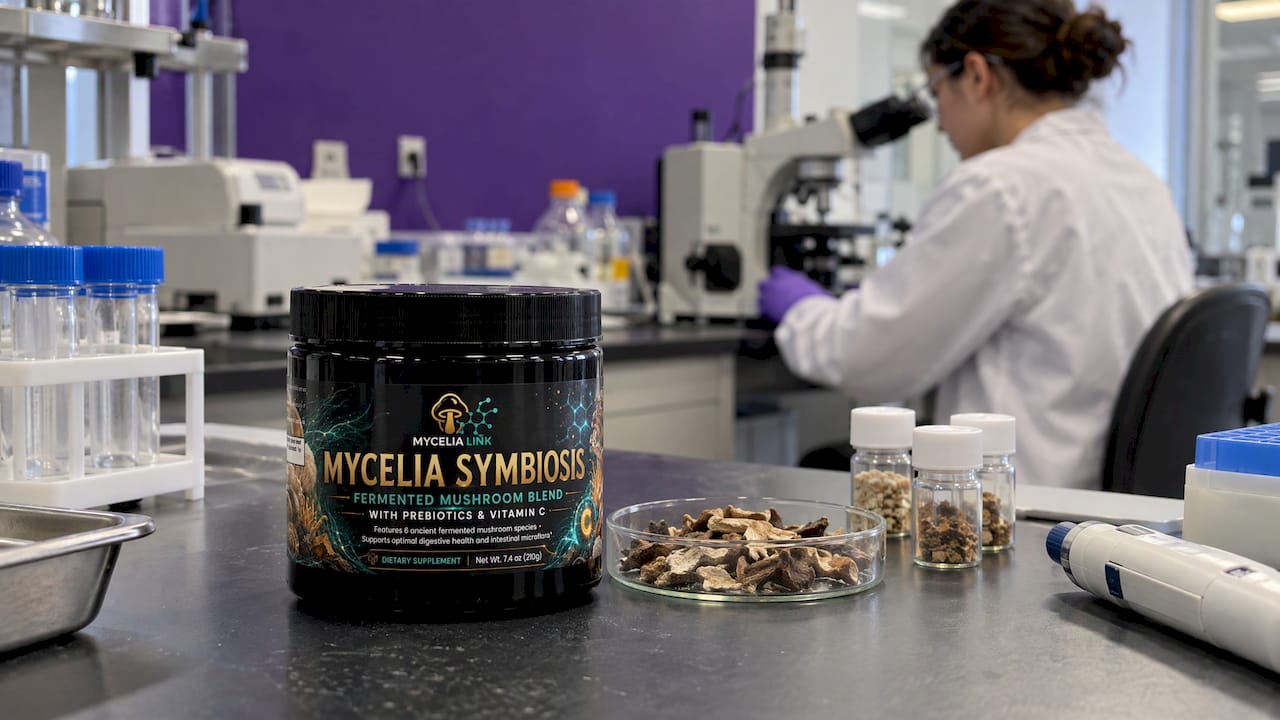 Mycotoxins in Mushroom Supplements: What to Know
What mycotoxins are, what studies found in mushroom supplements, who should check with a clinician,
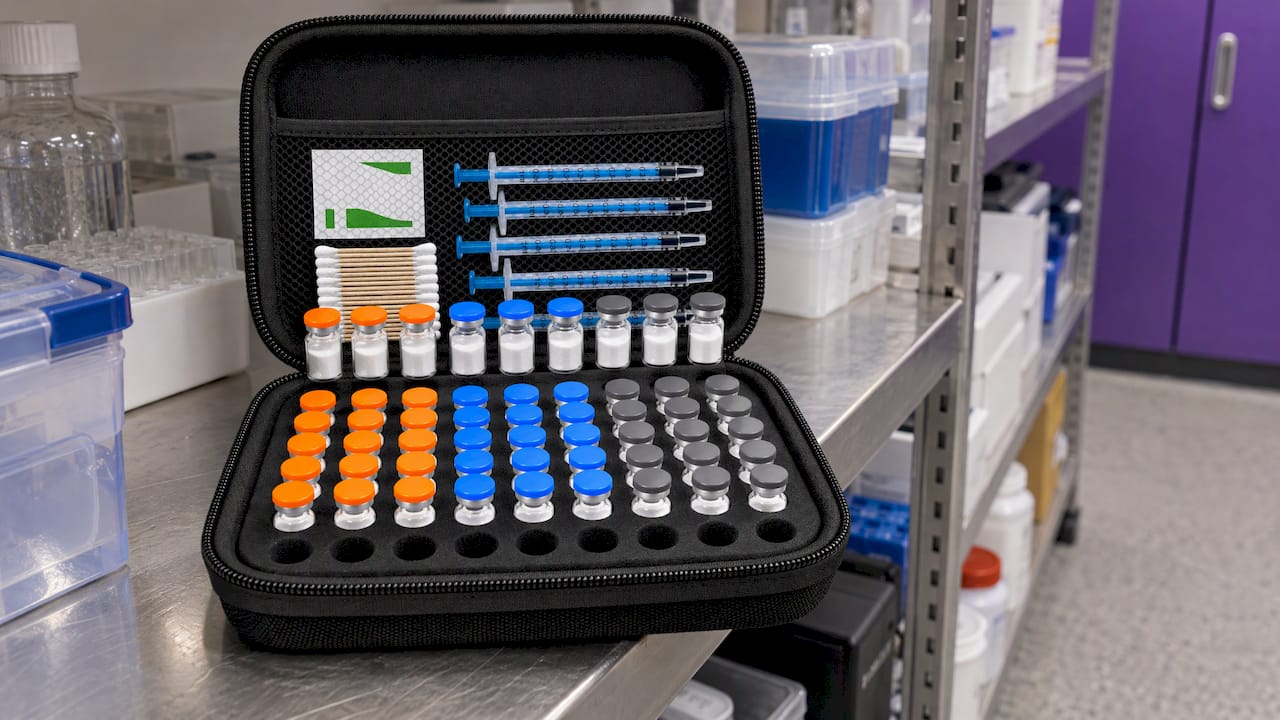 Peptide Storage Vials: How to Choose, Store and Protect Them
A lab guide to peptide storage vials: glass, closures, temperature, light, moisture and desiccant use,