Loading your cart...

Mycotoxins are toxins made by certain molds, and they can turn up in any dried plant or fungal product that was grown or stored badly, including mushroom supplements. The risk is real but manageable, and the practical answer is the same every time: buy products whose testing you can read. At Mycelia Link, every product is third-party tested and the Certificates of Analysis (COAs, the lab reports for a batch) are published, so you can read the results yourself instead of trusting a label.
TL;DR
- Mycotoxins are mold-made toxins that form when crops or dried materials are grown, dried or stored in warm, damp conditions. They survive processing, so cooking or extraction does not reliably remove them.
- A 2023 Italian study of 19 mushroom supplements found traces of aflatoxins in several batches, and one product above the EU maximum. Other research on mushrooms themselves found little cause for concern, which is why batch-level testing matters more than blanket worry.
- US dietary supplements are regulated as a category of food, and mycotoxin testing is often voluntary. A published COA is the clearest way to see what was tested.
- Anyone who takes medication, is pregnant, or has a medical condition should check with a healthcare professional before using a mushroom supplement and follow the product label.
Table of Contents
- What mycotoxins are and why they matter
- What studies have found in mushroom supplements
- Why a supplement can reach a shelf without a mycotoxin test
- How to read a COA for contaminants
- What affects contamination: growing, drying and storage
- Are mushroom supplements safe?
- Does the body get rid of mycotoxins?
- Shopping with mycotoxins in mind
- Where to start with Mycelia Link
- Our view
- FAQ
- Sources
What mycotoxins are and why they matter
The FDA explains that mycotoxins are toxins produced by certain molds and fungi that grow on foods such as grains, dried beans, dried fruits and coffee during crop production and storage. The ones the agency focuses on in human food are aflatoxins, deoxynivalenol, fumonisins, patulin, ochratoxin A, T-2 and HT-2 toxins, and zearalenone.
Aflatoxins get the most attention. According to the same FDA page, regularly eating foods containing them can raise the risk of liver cancer, cause birth defects, and lead to kidney and immune system problems. A large amount at once, or over several days, can cause liver failure. That is why the FDA has published action levels for aflatoxin and regularly tests foods for it.
Two features make mycotoxins different from ordinary spoilage:
- They are chemically stable. The WHO mycotoxins fact sheet notes that they survive food processing. You cannot see, smell or cook them out.
- They start with conditions, not just species. The same fact sheet says mold growth can happen before or after harvest, during storage in warm, damp, humid conditions.
That second point is the heart of the supplement question. A mushroom supplement is a dried, often powdered product. Where it was grown, what it was grown on, how fast it was dried and how it was stored all shape its contaminant profile.
What studies have found in mushroom supplements
The evidence is limited, and it points in two directions. Both are worth knowing.
The Italian market study
In February 2023, Risoli and colleagues published an analysis of 19 mushroom-based supplements from six companies sold in Italy. They found that only 6 of 19 samples matched the species stated on the label, and traces of aflatoxins appeared in several batches. One product, at 4.99 µg/kg total aflatoxins, exceeded the EU maximum level set under Commission Regulation (EC) No 1881/2006. A microgram per kilogram is one part per billion, so these are very small quantities, but regulators set limits that low on purpose.
The authors also point out that commercial raw materials are typically mycelium grown on substrates, and that cultivation conditions can influence the contaminant profile. Their conclusion is that the medicinal mushroom market needs tighter analytical controls and closer dialogue between scientists and regulators.
The broader supply chain picture
A 2019 report from Wageningen Food Safety Research looked at chemical hazards across the mushroom supply chain. It found limited data on mycotoxins in mushrooms. Dried Nigerian samples showed no EU-regulated mycotoxins, and Italian porcini samples were below the detection limit for aflatoxins and ochratoxin A. The authors saw no indication that mycotoxins were a concern in mushrooms themselves, while noting that wet, warm storage encourages fungal growth that can lead to mycotoxin formation.
Put the two together and the picture is useful. The mushroom is rarely the problem. The problem, where there is one, comes from substrates, drying, storage and the lack of batch testing. A 2025 review of herbs, spices and dietary supplements adds that when several mycotoxins occur together in one product, cumulative effects become a concern, and it calls for continued monitoring.
Why a supplement can reach a shelf without a mycotoxin test
In the United States, the same 2025 review explains that dietary supplements are regulated under the Dietary Supplement Health and Education Act as a category of food. Contaminant limits follow FDA guidance, such as the aflatoxin limits. Good manufacturing practice systems require monitoring of microbial and chemical contaminants, but analytical verification for mycotoxins is often voluntary or limited to high-risk materials.
The Minnesota Department of Agriculture adds the consumer side: the FDA does not approve supplements or require premarket review or safety approval, and professional-looking packaging does not show that a product was made commercially or labeled accurately. In other words, the label tells you what the maker says. The lab report tells you what was measured.
We go deeper on how products end up on shelves in why contaminated supplements reach shelves.
How to read a COA for contaminants
A certificate of analysis is a lab report tied to a specific batch. A useful one lets you answer a short list of questions.
- Is it a third-party lab? Results from an independent lab carry more weight than a maker’s own summary.
- Does it match your batch? The lot or batch number on the COA should match the number printed on your container.
- Which contaminants were tested? Look for a mycotoxin line, a heavy metals line and a microbial line. If mycotoxins are listed, check which ones. The FDA’s own multi-mycotoxin method, described in its compliance program CP 7307.001, detects 12 analytes at once by LC-MS/MS (liquid chromatography paired with mass spectrometry): aflatoxins B1, B2, G1 and G2, ochratoxin A, deoxynivalenol, fumonisins B1, B2 and B3, T-2, HT-2 and zearalenone. Patulin and aflatoxin M1 need separate methods.
- What are the limits? The American Herbal Products Association recommends maximum limits for herbal ingredients and supplements of 20 µg/kg (ppb) for total aflatoxins and 5 µg/kg for aflatoxin B1. The same guidance notes that fungi ingredients are treated as botanical dietary supplement ingredients. Results are normally reported as “ND” (not detected) or “<LOQ” (below the limit of quantitation) against a stated limit.
- Does it say what the material is? The Italian study’s species mismatches show why identity testing belongs on the same page as safety testing.
Our own guides walk through the same questions in more depth: 5 COA checks that separate quality from claims and 8 COA proofs for mushroom supplement purity.
A worked example
Say a COA lists total aflatoxins as 3 µg/kg, with the stated limit at 20 µg/kg. That result sits well under the AHPA recommendation. If the same report listed 6 µg/kg of aflatoxin B1 against a 5 µg/kg limit, it would be over, even though the total is low, because B1 has its own limit. Always compare each line with its own limit.

What affects contamination: growing, drying and storage
For a reader choosing a product, three production questions matter more than any marketing word.
- Substrate. Mycelium-based raw materials are grown on a medium such as grain, and the medium’s quality can influence what ends up in the powder. Fruiting body products come from the mushroom itself. Our guide on choosing fruiting body or mycelium by COA shows what to look for in each case.
- Processing form. Extracts and powders differ in what a lab report can tell you, which is covered in mushroom extract vs powder.
- Storage. The WHO advises keeping foods dry and cool and buying fresh. At home, that means a sealed container, away from heat and moisture, and not leaving a bottle open in a steamy bathroom.
If a powder smells musty, clumps from moisture or shows visible mold, stop using it and contact the seller.
Are mushroom supplements safe?
For most healthy adults, a well-made, correctly labeled mushroom supplement used as directed is a low-drama product. Safety comes down to knowing what is in the container and whether it suits your situation.
Check with a professional first. The Minnesota Department of Agriculture advises consulting a primary care provider before using mushroom products, because people react differently and products may cause adverse effects or interact with medications. It also says to keep them out of children’s reach. If you take prescription medication, are pregnant or nursing, or have a medical condition, ask your doctor or pharmacist before starting, and follow the product label rather than a dose from a forum.
Know what the species is. A 2025 USP presentation on mushrooms in dietary supplements reports that a June 2024 outbreak linked to chocolates and gummies containing Amanita muscaria caused 180 cases in 34 states with 3 potential deaths. It adds that the FDA’s September 2025 warning letter said there was inadequate information to assure that this species does not present a significant or unreasonable risk. That is a case of an unsuitable ingredient, not a mycotoxin, and it shows why a clear ingredient list matters. Our label claims guide covers what to check on a label.

Does the body get rid of mycotoxins?
The body does metabolize and excrete them. Aflatoxins, for example, are changed mainly in the liver and the byproducts leave mostly through the kidneys. That does not make exposure harmless: some of the intermediate products are reactive, which is why the regulatory limits exist.
If you are worried about a particular product, stop using it, keep the container with its batch number, and speak with a doctor or pharmacist about symptoms or testing. Products sold as “detox” or “binders” are not a substitute for that conversation. Contact the seller too. If you bought from us, write to info@mycelialink.com or text or call (580) 823-0004, and the Customer Satisfaction Guarantee applies: if you are not satisfied, contact us and we will make it right.
Shopping with mycotoxins in mind
A short routine covers most of the risk:
- Choose products with a plain ingredient list, with no proprietary blends hiding amounts or species.
- Find the COA for your batch and read the contaminant section.
- Compare reported values with the limits stated above.
- Store the product dry and cool, and use it before its date.
- Take it as the label directs, after checking with a healthcare professional if you have any health condition or take medication.
Our transparent supplement sourcing checklist and the supplement transparency guide expand each step. If you want a primer on the category itself, start with functional mushroom supplements explained.
Where to start with Mycelia Link
Our functional mushroom supplements are third-party tested, with the Certificates of Analysis published, clear labels and no proprietary blends. You can browse the full range on our supplements page, or look at a specific product such as the Mushroom Extract Complex. Members of M-Link Pro get member pricing, at $29.99 per month or $299 per year, on the M-Link Pro page.

Our handmade mushroom-infused soaps are on the soaps page, and all merch proceeds go to One Tree Planted.
Our view
We built Mycelia Link around one idea: a label should be something you can check. Mycotoxins are a good example of why. You cannot see them, smell them or cook them out, so the only honest way to talk about them is with a lab report in hand.
That is why every product we sell is third-party tested and why we publish the Certificates of Analysis. We would rather explain what a result shows than make a health promise. Clear labels, no proprietary blends and fair pricing follow from the same thinking: if you can see what is in the product, you can decide for yourself.
The research tells a measured story. Mushrooms themselves rarely appear to be the issue, while substrates, drying and storage are where contamination can start. That is a reason to value batch-level documentation, and it is the standard we hold our own products to.
Mycelia Link Industries
FAQ
Are mushroom supplements safe?
For most healthy adults, a correctly labeled product used as directed is considered a reasonable choice, and safety depends on knowing the species, the ingredients and the testing. Because the FDA does not approve supplements before sale, the Minnesota Department of Agriculture advises talking to a primary care provider first, especially if you take medication.
What do mycotoxins grow on?
They are produced by molds that grow on crops such as grains, dried beans, dried fruits and coffee, according to the FDA. Growth is more likely in warm, damp, humid conditions during storage, which is why dry, cool storage matters.
Who should not take a mushroom supplement without medical advice?
People who take prescription medication, are pregnant or nursing, have a medical condition, or plan to give a supplement to a child should speak with a healthcare professional first. Keep all supplements out of children’s reach and follow the product label.
Can cooking or processing remove mycotoxins?
Not reliably. The WHO notes that mycotoxins are chemically stable and survive food processing. The better control is prevention at the source, plus testing of the finished batch.
How do I know if a supplement was tested for mycotoxins?
Read the COA for your batch number and look for a mycotoxin line, such as aflatoxins, with a stated limit and a result from a third-party lab. Our published COAs let you review test results for our products directly.
Sources
- Mycotoxins | FDA
- Mycotoxins | WHO fact sheet
- Mushroom-Based Supplements in Italy (Risoli et al., Nutrients, 2023)
- Mycotoxins Occurrence in Herbs, Spices, Dietary Supplements (Toxins review, 2025)
- Mushroom Product Safety for Consumers (Minnesota Department of Agriculture, 2025)
- The Fungal Frontier: Mushroom Use in Dietary Supplements (USP, 2025)
- FDA compliance program CP 7307.001, Mycotoxins in Domestic and Imported Human Foods
- AHPA Guidance Policy on Microbiology and Mycotoxins (revised October 2024)
- Aflatoxins metabolism, effects on epigenetic mechanisms and their role in carcinogenesis
Recommended
- Functional Mushroom Supplements Explained: 2026 Guide
- 5 COA Checks That Separate Quality From Claims in Mushroom Supplements
- Stop Guessing: 5 COA Checks to Choose Fruiting Body or Mycelium
- Mushroom Label Claims: What They Mean and What to Check
This article is for informational and educational purposes only and is not medical advice. Research peptides sold by Mycelia Link are for laboratory research use only and are not for human or animal consumption. Statements about dietary supplements have not been evaluated by the Food and Drug Administration; these products are not intended to diagnose, treat, cure or prevent any disease.
Categories:
Related Posts
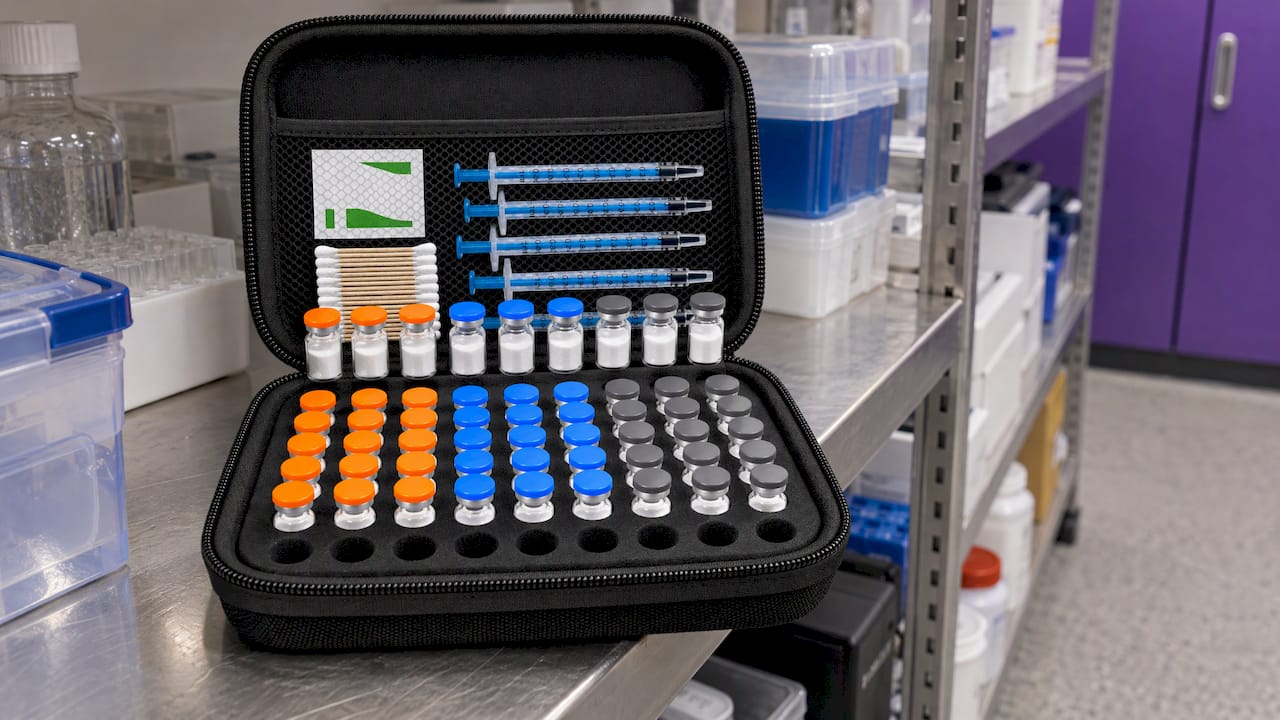 Peptide Storage Vials: How to Choose, Store and Protect Them
A lab guide to peptide storage vials: glass, closures, temperature, light, moisture and desiccant use,
 Placebo-Controlled vs Open-Label: How Trial Design Shapes Evidence
Placebo-controlled and open-label trials answer different questions. Learn what each design means, how blinding works,