
Loading your cart...

Antrodia cinnamomea (also sold as Antrodia camphorata) is a Taiwanese medicinal mushroom that has been studied for liver markers, antioxidant activity and immune signaling. The honest summary is that lab and animal results are plentiful, human trials are few and small, and no study shows that it treats or prevents any disease. This guide separates what was measured in people from what was only seen in cells, then shows how to judge any Antrodia product before you buy.
TL;DR
- Antrodia cinnamomea is a mushroom used in traditional Chinese medicine. Most of its reported activity (antioxidant, anti-inflammatory, immune-related) comes from cell and animal work.
- Small human trials of the mycelium found no adverse events in a 28-person liver study, plus a 5% to 6% drop in total cholesterol in an uncontrolled pilot of 32 healthy adults. Both are early findings, not proof.
- In a small cancer trial, it did not significantly improve survival, and a platelet signal appeared. Anyone in cancer care should talk to their oncology team first.
- Fruiting body, mycelium and extract are different products. A published Certificate of Analysis (COA) is the best way to know what is in the bottle.
Table of Contents
- What Antrodia cinnamomea is
- Antrodia benefits: what human studies actually found
- What is not supported
- Evidence at a glance
- Our perspective: why the label matters more than the headline
- How to evaluate an Antrodia product
- Who should talk to a professional first
- Where our mushroom range fits
- FAQ
- Sources
What Antrodia cinnamomea is
Antrodia cinnamomea, also called Antrodia camphorata in older literature and many supplement listings, grows naturally in Taiwan. Researchers describe it as a medicinal fungus used in traditional Chinese medicine for conditions including liver complaints, abdominal pain, drug intoxication and diarrhea. That is the traditional use. Traditional use is a reason scientists study something. It is not evidence that it works.
The fungus is hard to obtain in the wild, which is why most products today come from cultivation. The form matters, and we cover that below.
Fruiting body, mycelium and extract
The fruiting body is the visible mushroom structure. Mycelium is the fungal root network. An extract is a concentrate pulled from either one, often with water or alcohol.
According to industry coverage of Taiwan’s Antrodia market, fruiting bodies are often wild-harvested or grown on wood, which makes them prone to environmental contaminants and big price swings. Mycelium is typically grown by controlled fermentation, which supports consistency in compounds such as triterpenoids. One ingredient manufacturer’s explanation says submerged fermentation allows tight control over the environment and nutrients. Note the source is a company that sells ingredients, so treat it as a description of the method, not an independent verdict.
Neither form is automatically better. Which one suits you depends on what the label and COA show. Our guide on choosing fruiting body or mycelium with COA checks walks through it.

Antrodia benefits: what human studies actually found
There are three bodies of evidence: cell and animal studies, early human trials, and reviews. Weighted by how much they can tell you about people, they rank in the reverse order.
Liver markers
The best-known line of research is liver health. In a randomized, double-blind, placebo-controlled trial of Antrodia cinnamomea mycelium, 28 people with nonalcoholic steatohepatitis (NASH) took it for six months. The supplement group showed improvement in an inflammatory marker (TNF-α) and in SteatoTest, a blood-based fibrosis indicator, which fell from a mean of 0.66 at baseline to 0.49 at six months (p < 0.029). No adverse events were reported.

How to read that: it is a promising signal in a very small group, measured with blood-test indices rather than biopsies. It does not show that Antrodia treats liver disease, and it should not replace anything a hepatologist has prescribed.
Industry coverage also reports that a Taiwanese company, Greenyn Biotechnology, ran clinical trials in regular drinkers and chronic hepatitis B patients and is pursuing regulatory approvals in Asian markets. That is a company-linked report in a trade outlet, so weigh it accordingly.
Cholesterol
A pilot study of solid-state cultivated mycelium followed 32 healthy men and women for three months. Fasting glucose, blood pressure, triglycerides, and liver and kidney indices did not change significantly. Total cholesterol fell by 5.7% in men and 5.3% in women, and no adverse events occurred. The design was open-label and single-arm, meaning no placebo group. Without a control, changes like these can have other explanations, so the authors call the results preliminary.
Safety in healthy volunteers
A first-in-human phase I study tested LEAC-102, a botanical extract of Antrodia cinnamomea, in healthy volunteers, with the goal of finding a maximum tolerated dose. The tested daily levels ran from 597.6 to 2988 mg. This was a research-grade extract in a trial, not a retail supplement, so the doses do not translate into a recommendation for any product. Always follow the label of whatever you buy.
Immune activity in the lab
Researchers isolated a galactomannan from Antrodia cinnamomea (called ACP) with a mannose-to-galactose ratio of 75% to 25%. In laboratory models it activated macrophages and dendritic cells through the TLR4 receptor. This is a cell-level finding about one extracted compound. It does not mean that swallowing mushroom powder produces the same effect.
Antioxidant and other reported activities
A 2022 review of its bioactive compounds lists reported activities such as hepatoprotection, antioxidant effects and others, based largely on laboratory work. A 2025 review of its phytochemistry is cited in search results, but we did not read its full text, so we are not relaying its findings here.
What is not supported
Cancer claims
You will see Antrodia described as anti-tumor online. The human data is thin. In a 2016 randomized study of 37 patients with advanced cancer receiving chemotherapy, mean overall survival was 5.4 months with Antrodia cinnamomea and 5.0 months with placebo (p = 0.340), which is not a significant difference. Platelet counts were lower in the supplement group (p = 0.02), and the authors called for larger trials before anyone combines it with conventional therapy.
A narrative review in integrative oncology makes the broader point: many promising pre-clinical results for medicinal mushrooms have not translated into significant clinical outcomes, and supplements should not stand in for standard care. If you are in cancer treatment, ask your oncologist before taking any mushroom supplement.
Hangover and “miracle” language
Some trade articles use the word miracle. We don’t, and you should be wary of any seller who does. Nothing in the human literature we reviewed supports a hangover cure or a promise for any condition.
Evidence at a glance
| Claim you may see | Best evidence found | How strong |
|---|---|---|
| Supports liver health | 28-person placebo-controlled NASH trial, marker changes | Early, small |
| Lowers cholesterol | 32 healthy adults, no control group, about 5% to 6% drop | Preliminary |
| Well tolerated | No adverse events in both small trials above | Limited sample size |
| Improves cancer outcomes | 37 patients, no significant survival difference | Not supported |
| Immune activity | Cell models, one purified galactomannan | Lab only |
Our perspective: why the label matters more than the headline
We sell functional mushroom supplements, and we’ve watched the same pattern repeat across the category. A compelling study gets attached to a product that does not resemble what was tested. The trial used a specific mycelium preparation or a purified extract. The shelf product is a powder of unknown strength.
That gap is why we publish a Certificate of Analysis for every product, use clear labels, and avoid proprietary blends. It is also why we explain what a lab result shows instead of promising a health outcome. Research on one preparation does not carry over to another. Total polysaccharide numbers, for example, can include alpha-glucans, which have little biological activity, so a big number on a front label tells you little. Our posts on mushroom extract versus powder and what extract ratios hide go into detail.
The FDA is plain about the rules: under DSHEA, it does not approve dietary supplements for safety or effectiveness before they are marketed. Availability on a shelf is not endorsement. So the reader has to do the checking, and the company should make that easy.
— Mycelia Link Industries
How to evaluate an Antrodia product
- Identify the form. Is it fruiting body, mycelium or extract? Does it name the species, Antrodia cinnamomea or camphorata, and the part used?
- Look for a COA from a third-party lab. It should match the lot on your bottle. Our five COA checks for mushroom supplements and eight purity proofs list what to look for, including contaminant testing.
- Check what is measured. Look for specific compounds, such as beta-glucans or triterpenoids, rather than only a total polysaccharide figure. See our note on beta glucan testing.
- Reject proprietary blends. If the label hides amounts per ingredient, you cannot compare it with any study.
- Read the whole label. Our two-minute label checklist covers serving size, other ingredients and added fillers.
- Ask who tested it. Label accuracy testing only means something if an independent lab did it.
For a broader view, the transparent sourcing checklist is built for U.S. shoppers.
Who should talk to a professional first
The research above points to specific situations where a conversation with a clinician is sensible:
- Anyone with a liver condition. The NASH trial was supervised research, not self-directed use. Your hepatologist or primary care doctor should know what you take.
- Anyone in cancer treatment. The platelet finding in chemotherapy patients is the reason to ask your oncology team before adding any mushroom product.
- People on blood-thinning or other prescription medicines, because interactions with supplements are not well mapped for Antrodia.
- Pregnant or breastfeeding adults and children. We found no safety data for these groups in the studies we reviewed.
Follow the product label for any supplement, and do not treat a study dose as a recommended dose.
Where our mushroom range fits
If you want to compare functional mushroom products with published lab results and plain labels, start with our Supplements page. Each product is third-party tested with its COA published, and we don’t use proprietary blends. Our range includes Lion’s Mane and Reishi, and you can read more in our functional mushroom supplements explained guide. If you’re not satisfied with a purchase, contact us at info@mycelialink.com or (580) 823-0004 and we’ll make it right. M-Link Pro members get member pricing: it is $29.99 per month or $299 per year.
FAQ
What are the health benefits of Antrodia camphorata?
Antrodia camphorata is another name for Antrodia cinnamomea. Small human trials report changes in liver and cholesterol markers and good short-term tolerability, while most other reported activity comes from cell and animal studies. None of this shows it treats or prevents a disease.
What is Antrodia cinnamomea mycelia?
Mycelia is the plural of mycelium, the root-like body of the fungus. Producers grow it by fermentation, either in liquid or on solid substrate, and then dry and grind it. It differs from the fruiting body, so studies on one do not automatically apply to the other.
Is Antrodia safe?
In the two small mycelium trials above, no adverse events were reported over three to six months. That is limited evidence from small groups. A lower platelet count was seen in people on chemotherapy, so anyone with a medical condition or on medication should check with a healthcare professional first.
Does Antrodia help with cancer?
The one randomized study we found in advanced cancer patients showed no significant survival difference from placebo. Experts in integrative oncology urge better controlled human trials and warn against replacing standard care with supplements.
Sources
- Hepatoprotective Effect of Antrodia cinnamomea Mycelium in Patients with NASH (PubMed)
- Pilot study of Antrodia cinnamomea solid-state cultivated mycelium in healthy adults (PMC)
- Randomised study of Antrodia cinnamomea with chemotherapy in advanced cancer (PMC)
- Antrodia cinnamomea galactomannan and Toll-like receptor 4 (IJBS)
- First-in-human Phase I study of LEAC-102 in healthy volunteers
- Significance of Medicinal Mushrooms in Integrative Oncology (PubMed)
- Review of Bioactivity, Isolation, and Identification of Active Compounds from Antrodia cinnamomea (PMC)
- Taiwan’s Antrodia cinnamomea for hangover relief and liver health (NutraIngredients)
- Comparing mushroom production technologies (New Bellus)
- Questions and Answers on Dietary Supplements (FDA)
- Phytochemistry and health functions of Antrodia (ScienceDirect search)
Recommended
- Chaga Benefits, Lab vs Human Evidence, and a COA Vetting Checklist
- Shiitake Benefits: Small Trials, Cooking, and COA Checks
- Reishi Benefits: What Human Trials and Third Party Tests Actually Show
- 3–6 g/day Tested Cordyceps: What Science Supports and How to Choose
This article is for informational and educational purposes only and is not medical advice. Research peptides sold by Mycelia Link are for laboratory research use only and are not for human or animal consumption. Statements about dietary supplements have not been evaluated by the Food and Drug Administration; these products are not intended to diagnose, treat, cure or prevent any disease.
Categories:
Related Posts
 Standardized Extract Meaning: How to Read the Label
What "standardized extract" means on a supplement label, how marker compounds and ratios work, and
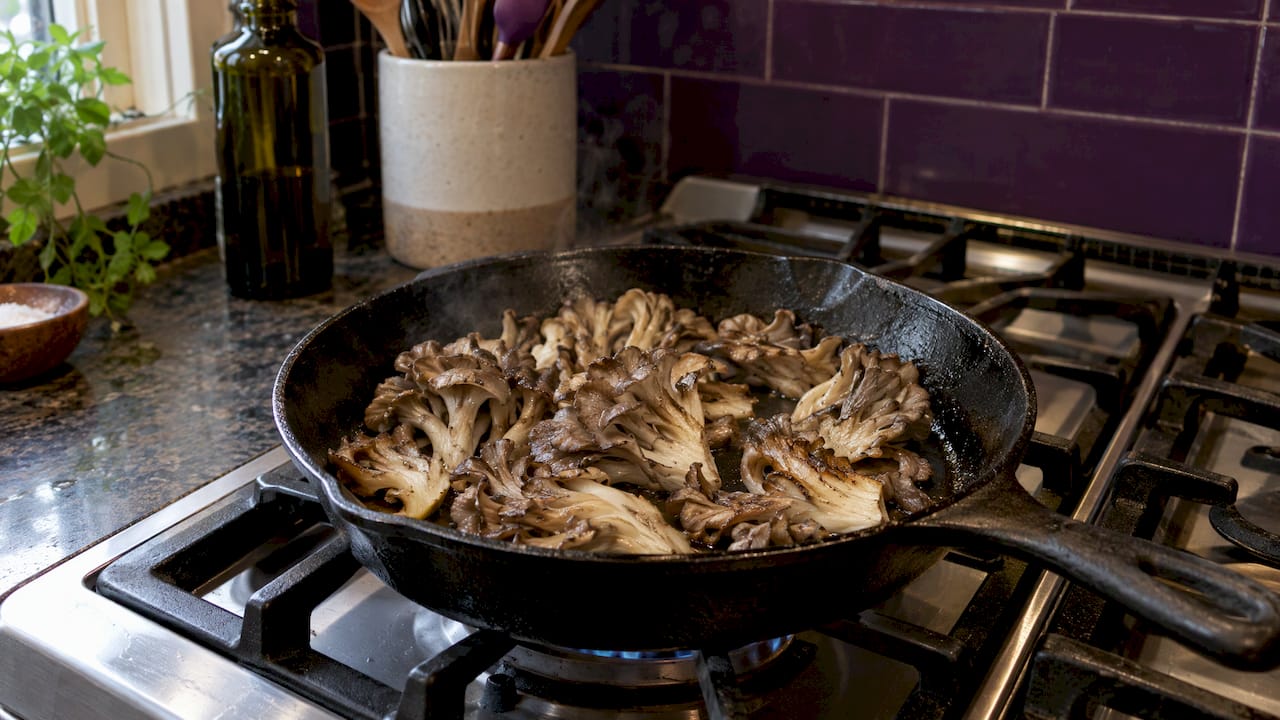 Maitake Benefits: What the Research Shows and What to Check
Maitake benefits explained: nutrients, beta-glucans, one cognitive trial in older adults, safety, medication cautions and
 Absorption vs. Bioavailability: What’s the Difference?
Absorption is how much crosses the gut wall. Bioavailability is how much active compound reaches