
Loading your cart...

Beta glucan is a sugar-based molecule (a polysaccharide) that skincare brands use for moisture and comfort. Small clinical studies on hydration, barrier measures and skin comfort exist, but results depend on the source of the beta glucan, its structure and the full formula around it. The practical way to shop is to look past the buzzword: ask where the beta glucan comes from, how much is in the product, and whether a lab has measured it. That is the standard we hold our own mushroom-infused soaps and supplements to at Mycelia Link: third-party testing, published Certificates of Analysis (COAs) and clear labels.
TL;DR
- Beta glucan is a naturally occurring polysaccharide found in oats, yeast, fungi, algae and bacteria. Its skin effects depend on its source and molecular structure.
- Studies describe moisturizing, soothing and barrier-supporting effects. Most are small, and many test a whole formula rather than beta glucan alone.
- Beta glucan and hyaluronic acid both form a moisture-holding film on skin. They are different molecules, and you do not have to choose one.
- Judge a product by the source, the stated percentage and the lab data behind it, not by the word “beta glucan” on the front.
- Follow the product label, patch test anything new, and check with a dermatologist if you have a skin condition.
Table of Contents
- What beta glucan is, in plain terms
- What beta glucan may do for skin
- Why beta glucan can feel moisturizing
- Beta glucan vs. hyaluronic acid
- How to use beta glucan in a routine
- How to shop for a beta glucan product
- Beta glucan from mushrooms
- Handmade mushroom-infused soap
- Where to start with Mycelia Link
- FAQ
- Sources
What beta glucan is, in plain terms
A glucan is a chain of glucose units. In a beta glucan, those units are linked in a particular way (the “beta” linkage). That is different from the “alpha” glucans you find in starch. If you want the chemistry side by side, our guide to alpha-glucans vs beta-glucans walks through the differences.
A 2025 review by Feng and colleagues describes β-glucan as a naturally occurring polysaccharide found across plants, fungi, bacteria and algae, and notes that its skin effects depend on source, molecular structure and physicochemical properties. That last point is the one most product pages skip. Oat beta glucan, yeast beta glucan and mushroom beta glucan are not interchangeable. Chain length, branching and how the ingredient is processed all change how it behaves in a formula.
You will see beta glucan in a few forms on ingredient lists:
- Oat beta glucan, common in creams and balms.
- Yeast-derived beta glucan, common in serums and essences.
- Mushroom-derived beta glucan, which comes from fungi such as reishi or shiitake.
- Sodium carboxymethyl beta-glucan, a modified, more water-soluble form.
What beta glucan may do for skin
The 2025 review lists potential skin actions including moisturizing, antioxidant, anti-inflammatory and barrier-repair effects. These are described as potential actions. Here is what individual studies actually measured.
Hydration and barrier measures
Skin hydration is usually measured with a probe that reads moisture in the outer layer. Barrier health is often measured by transepidermal water loss (TEWL), which is how much water evaporates through the skin. Lower TEWL generally means the barrier is holding water better.
In a 2021 split-face, double-blinded, vehicle-controlled study of 20 people after fractional laser treatment, the side using a β-glucan-containing regimen showed better hydration on days 7 and 14 and lower TEWL on day 7 than the side using the vehicle. A vehicle is the same formula without the active ingredient. In the same study, 63.2% of participants rated recovery better on the β-glucan side, and the regimen was reported as well tolerated.

Two cautions help you read that result. The participants were recovering from a laser procedure, so their skin was in a specific state. And the test was of a skincare regimen containing beta glucan, so you cannot credit the ingredient alone.
Smoothness and the look of fine lines
The same 2025 review reports small clinical studies on wrinkle appearance, hydration and elasticity, including a 27-participant, eight-week oat β-glucan trial with reductions in wrinkle height, depth and roughness. Treat this as an early signal from a small group, not a promise of results.
Dry, easily irritated skin
A 2016 study of a pleuran β-glucan cream (pleuran is a beta glucan from a mushroom) enrolled 105 people with mild-to-moderate atopic dermatitis, a form of eczema. Of those, 80 completed the open split-body study, and symptoms and EASI scores improved on the treated side, with the formulation generally well tolerated. The authors framed the cream as a possible supportive, complementary option, not a replacement for established medical care. If you have eczema or any diagnosed skin condition, your dermatologist or doctor sets the plan, and a beta glucan product would be a conversation to have with them.
Why a single ingredient rarely tells the whole story
A 2023 study tested a spray containing β-glucan plus panthenol (a vitamin B5 derivative) in an experimental dry-skin model. Barrier-related measures and itch and inflammation improved, but the study did not test β-glucan alone, and the moisturizer base also helped the experimental lesions. This is how most cosmetic research works: the base, the other actives and the concentration all matter. It is also why a transparent label matters more than a single headline ingredient.
Why beta glucan can feel moisturizing
The 2025 review ties the moisturizing potential partly to the molecule’s multi-helix structure and hydrogen bonding. In its description, this can create a moisture-retaining surface film and limit water loss. In everyday terms, beta glucan is a humectant-like film former: it sits on the surface, holds water near the skin and can make a serum or cream feel soft rather than sticky.
That is also the reason it appears in products aimed at dry, tight or reactive-feeling skin. A moisturizer with beta glucan is a good fit if your main goal is comfortable hydration. It is not a stand-in for sunscreen, and it does not replace medical care.
Beta glucan vs. hyaluronic acid
Both ingredients show up in hydrating products, and both work at the surface. A 2025 review of topical hyaluronic acid reports that high-molecular-weight HA can form a surface film that reduces TEWL and retains water, while molecular weight influences penetration and observed hydration effects.
| Beta glucan | Hyaluronic acid | |
|---|---|---|
| What it is | Polysaccharide (glucose chain) from oats, yeast, fungi, algae or bacteria | Polysaccharide-type molecule (glycosaminoglycan) made by fermentation in cosmetics |
| How it is described in the research | Multi-helix structure that can form a moisture-retaining film | Larger molecules form a surface film that reduces TEWL |
| What varies most | Source, structure, processing | Molecular weight |
| Typical product forms | Serums, creams, mists, balms | Serums, creams, essences |
The sources we cite do not test the two head to head, so any claim that one “beats” the other deserves skepticism. The more useful question is what else is in the formula and whether the maker discloses it. Many people use both in one routine, and that is a reasonable choice if your skin tolerates them.
How to use beta glucan in a routine
Beta glucan is usually found in leave-on products. A simple approach:
- Start with clean skin. Cleanse gently, then apply a serum or moisturizer with beta glucan while the skin is still slightly damp.
- Add one new product at a time. If a reaction happens, you will know the cause.
- Patch test first. Apply a small amount to the inner forearm or behind the ear and wait before using it on your face.
- Follow the label. Directions for amount and frequency are set by the maker of that formula.
- Pair it with the basics. Daily sunscreen does the sun protection that no moisturizing ingredient does.
Questions about combining it with retinol or exfoliating acids come up often. We are not aware of published research in the sources above that tests those combinations, so follow the instructions on each product and ask a dermatologist if your skin is sensitive, broken or being treated for a condition.
Safety
The 2016 Cosmetic Ingredient Review Expert Panel assessed microbial polysaccharide gums, a related group of cosmetic ingredients, and concluded they were safe in cosmetic formulations at the then-current practices of use and concentration. That is a safety assessment of a group of ingredients, not of every product. Allergies and sensitivities are individual. Stop using a product that stings, burns or causes a rash, and see a dermatologist if irritation continues.
How to shop for a beta glucan product
The skincare aisle is full of the phrase “beta glucan”, and the label rarely tells you much. Here is what to look for.
1. The source. Oat, yeast and mushroom beta glucans differ. A brand that names its source is giving you something to evaluate.
2. The percentage, and what it measures. A mushroom product can list “polysaccharides” on the front, but that number can include starches and other sugars. Beta glucan is the specific measurement. Our explainer on what a beta glucan percentage means shows how to read it, and beta glucans vs. polysaccharides covers the label wording.
3. A named lab method. Quality teams look at several lab numbers, which we cover in beta glucan testing. As a shopper, the useful signal is a published, third-party COA for the batch you are buying.
4. No proprietary blends. A proprietary blend lists a total weight without telling you how much of each ingredient is in it. You cannot judge an active you cannot see.
5. Claims that match the evidence. Studies on beta glucan are mostly small. Be wary of any page that promises a transformation.

Beta glucan from mushrooms
Fungi are one of the main natural sources of beta glucan, which is why mushroom ingredients show up in both supplements and skincare. If you are curious about the ingestible side, our functional mushroom health benefits list goes through what human and lab evidence exists, and mushroom extract vs. powder explains why extraction and beta glucan content matter when you buy.
A word on expectations. Eating a mushroom supplement and applying a skincare product are different things, and the studies above are about topical formulas. We do not claim our supplements or soaps treat, cure, prevent or heal any condition. Follow the product label, and check with a healthcare professional if you are pregnant, take medication or have a medical condition.
Handmade mushroom-infused soap
If you prefer a simple, wash-off step in your routine, we make Hand Made Mushroom Infused Soap. Like every Mycelia Link product, it is third-party tested with Certificates of Analysis published. Our post on mushroom soap benefits explains what the lab results show and where we keep our language measured, so you can read the data and decide for yourself.
Our perspective
We built Mycelia Link around one idea: you should be able to see what you are buying. Beta glucan is a good example of why. The word appears on labels everywhere, but the research says its effects depend on source, structure and the whole formula. A name on the front tells you little. A number from an independent lab tells you a lot.
That is why every product we sell is third-party tested and the Certificates of Analysis are published. It is why our labels are clear, with no proprietary blends, and our pricing is fair and straightforward. When we write about mushrooms, beta glucan or skin, we explain what the lab results show instead of making health promises, because the studies are small and honest language serves you better than hype.
For our soaps and supplements, that means you can read the data and make your own call. For our merch, it means the proceeds go to One Tree Planted. If you are tired of hidden ingredients and vague claims, this is the standard we think every wellness product should meet.
Mycelia Link Industries
Where to start with Mycelia Link
If you want a mushroom-infused soap made by hand and backed by published lab results, start with our soap collection. If you are looking at mushroom supplements, browse our supplements and read the COA for the batch you choose.

M-Link Pro members get member pricing: the plan is $29.99 per month or $299 per year on the M-Link Pro page. Every order is covered by our Customer Satisfaction Guarantee. If you are not satisfied, contact us and we will make it right, at info@mycelialink.com or by text or call at (580) 823-0004. You can also see our full range at mycelialink.com.
FAQ
What does beta glucan do in skincare?
It is used mainly for moisture and comfort. Research describes moisturizing, antioxidant, anti-inflammatory and barrier-supporting potential, and small studies have measured improved hydration and lower water loss in specific settings. Results depend on the source and the full formula.
Is beta glucan better than hyaluronic acid?
The sources we cite do not compare them directly. Both can form a film on the skin that helps hold water, and they are different molecules. Many routines include both, so you can decide based on how your skin feels and what the label discloses.
Is beta glucan safe for sensitive skin?
In the studies above, beta glucan formulations were generally well tolerated, and a 2016 expert panel found a related group of polysaccharide gums safe in cosmetics at typical use levels. Individual reactions still happen, so patch test first and ask a dermatologist if your skin is reactive or you have a diagnosed condition.
Can I use beta glucan with retinol?
We have no published research to cite on that pairing. Follow the directions on each product, add them one at a time, and ask a dermatologist if you are unsure, especially if your skin is sensitive or irritated.
How do I know a beta glucan product is what it says?
Look for the named source, a stated beta glucan percentage and a published third-party COA for the batch. A product that lists only a vague total or hides amounts inside a blend leaves you guessing.
Sources
- Exploring the Properties and Application Potential of β-Glucan (Feng et al., 2025)
- Administration of skin care regimens containing β-glucan after fractional laser treatment (2021)
- β-Glucan-based cream (containing pleuran) in mild-to-moderate atopic dermatitis (2016)
- Alleviating Skin Barrier Disruption, Skin Inflammation, and Itch with a β-glucan and panthenol spray (2023)
- Hyaluronic Acid in Topical Applications: The Various Forms (2025)
- Safety Assessment of Microbial Polysaccharide Gums as Used in Cosmetics (2016)
Recommended
- Beta Glucan Percentage: What the Number Means
- Mushroom Soap Benefits: Real Hydration, Not Anti Aging, Check the COA
- Tremella Benefits: What the Research Actually Shows
This article is for informational and educational purposes only and is not medical advice. Research peptides sold by Mycelia Link are for laboratory research use only and are not for human or animal consumption. Statements about dietary supplements have not been evaluated by the Food and Drug Administration; these products are not intended to diagnose, treat, cure or prevent any disease.
Categories:
Related Posts
 Standardized Extract Meaning: How to Read the Label
What "standardized extract" means on a supplement label, how marker compounds and ratios work, and
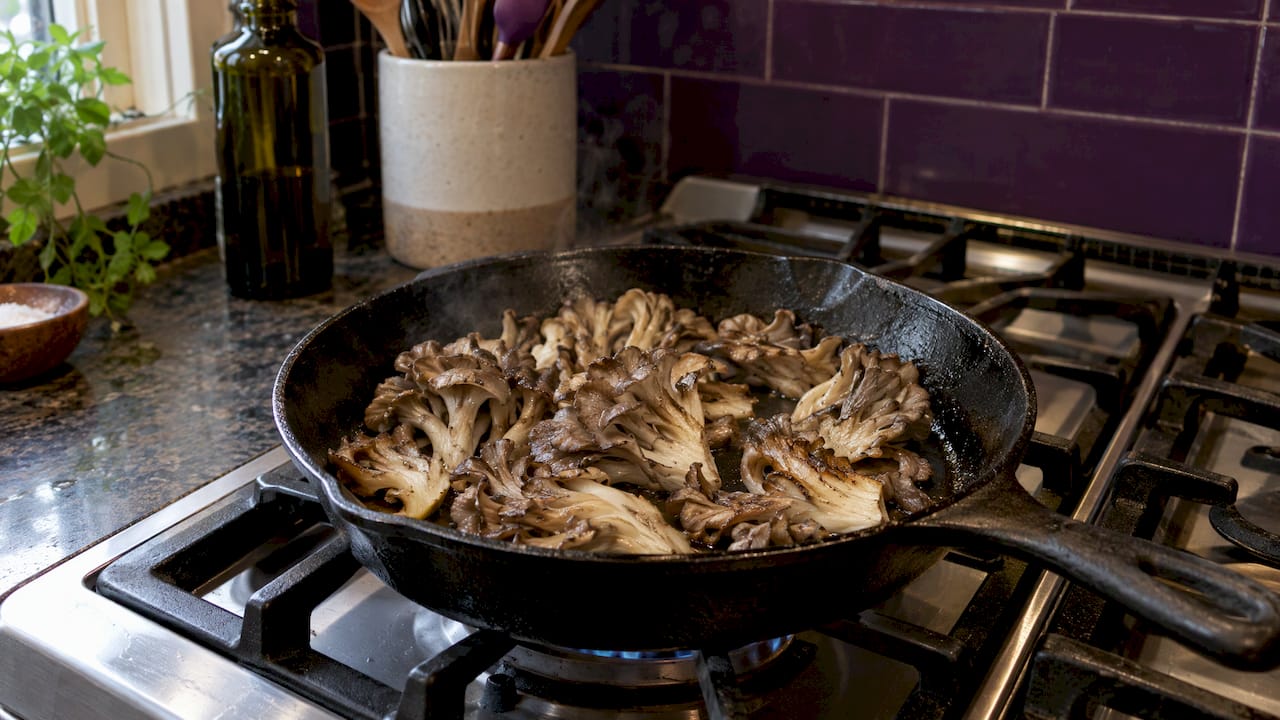 Maitake Benefits: What the Research Shows and What to Check
Maitake benefits explained: nutrients, beta-glucans, one cognitive trial in older adults, safety, medication cautions and
 Absorption vs. Bioavailability: What’s the Difference?
Absorption is how much crosses the gut wall. Bioavailability is how much active compound reaches