


Loading your cart...

A wellness biomarker is an objectively measurable biological characteristic that reflects normal or pathogenic biological processes, or your body’s response to health interventions. Understanding wellness biomarkers gives you a factual window into how your body is actually functioning, not just how you feel on a given day. Standard panels typically cover 30–80 markers across metabolic, cardiovascular, hormonal, and organ function domains. That breadth matters because no single number tells the full story. The National Institutes of Health and the FDA both recognize biomarkers as foundational tools in clinical research and personalized medicine, and their role in everyday wellness is growing fast.
What are wellness biomarkers explained in plain terms?
Wellness biomarkers are measurable signals your body produces continuously. They come from blood draws, urine samples, saliva, tissue biopsies, and increasingly from wearable sensors. Each marker reflects a specific biological process, whether that is how efficiently your cells use glucose, how inflamed your arteries are, or how well your kidneys filter waste.

The core value of biomarkers for health) is that they make the invisible visible. You cannot feel mildly elevated blood sugar or a slowly rising inflammatory marker. But a lab result can catch those shifts years before they become symptoms. That early detection window is exactly where biomarker tracking delivers its greatest benefit.
Functional medicine practitioners describe biomarkers as navigation tools that reveal metabolic dysfunction long before disease appears. This framing shifts the goal from treating illness to preventing it. For anyone serious about longevity or personal health optimization, that shift is the whole point.
What types of wellness biomarkers are commonly measured?
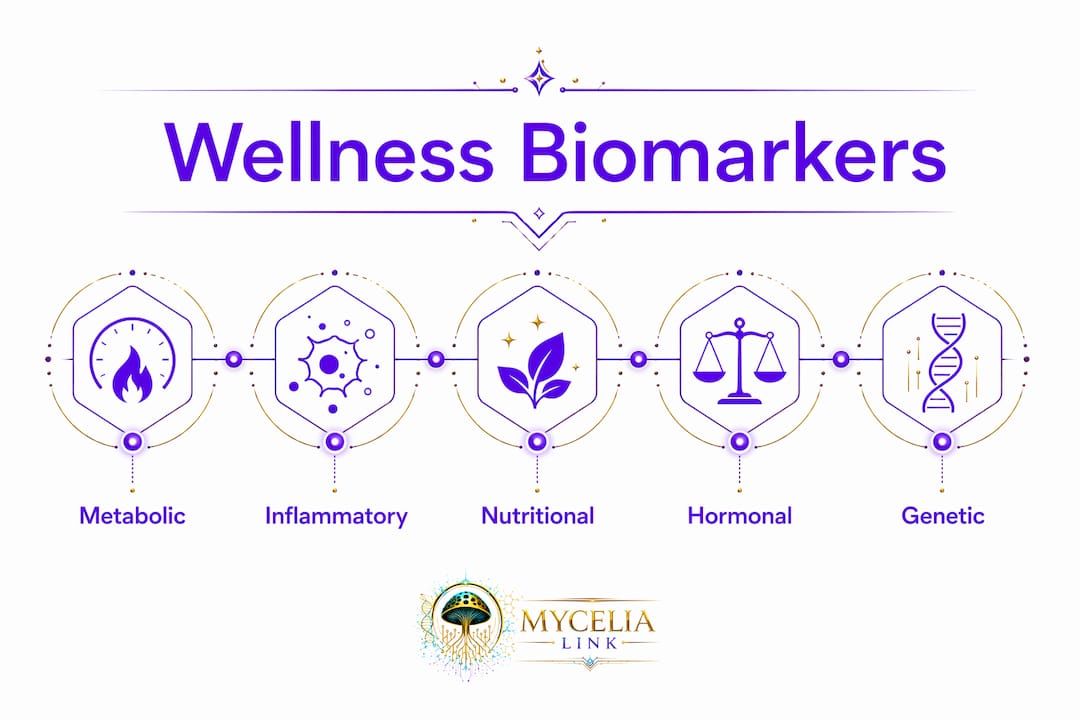
Biomarkers cluster into four main categories, each reflecting a different body system.
- Metabolic markers: Fasting glucose, insulin, and HbA1c track how your body processes sugar and manages energy. HbA1c reflects average blood sugar over roughly three months, making it far more informative than a single glucose reading.
- Cardiovascular markers: Lipid panels measure total cholesterol, LDL, HDL, and triglycerides. ApoB predicts cardiovascular events more accurately than LDL-C alone, especially in people with metabolic syndrome, yet it rarely appears on standard screening panels.
- Inflammation markers: High-sensitivity CRP, or hs-CRP, is the most widely used inflammation biomarker. Readings above 2 mg/L in the absence of acute illness signal chronic inflammation and warrant close monitoring.
- Organ function markers: Liver enzymes (ALT, AST), creatinine, and eGFR assess how well your liver and kidneys are working. These markers catch early organ stress that standard checkups often miss.
- Longevity and molecular markers: Plasma proteomic profiling can now estimate biological age across multiple cell types. Research published in Nature Medicine found that 20–25% of individuals show accelerated aging in at least one cell type, a finding invisible to standard blood panels.
Pro Tip: Never evaluate a single marker in isolation. Patterns like elevated fasting glucose combined with high triglycerides can signal early insulin resistance even when each value sits just inside the normal range.
How are wellness biomarkers measured and interpreted effectively?
Accurate measurement starts with consistent conditions. A single test taken at random gives you a data point. A series of tests taken under the same conditions gives you a trend. Trends are where the real insight lives.
- Choose your testing method. Blood draws remain the gold standard for most metabolic and cardiovascular markers. Urine tests cover kidney function and certain hormones. Saliva panels measure cortisol and some sex hormones. Wearables like continuous glucose monitors track real-time metabolic responses to food and exercise.
- Establish a personal baseline. Longitudinal tracking with consistent timing and fasting conditions reduces variability and reveals true health trends. One test tells you where you are today. Six months of quarterly tests tell you which direction you are heading.
- Test under consistent conditions. Fasting state, time of day, hydration level, and recent exercise all shift biomarker values. Testing at 7:00 AM fasted every quarter removes those variables and makes comparisons meaningful.
- Understand optimal versus reference ranges. Standard lab reference ranges are built from population averages that include many unhealthy individuals. Optimal ranges are narrower and reflect what research associates with long-term health. A result inside the reference range is not automatically a healthy result.
- Read markers in context. Isolated high or low values can mislead without correlated markers and clinical factors. A high ALT reading after heavy exercise is normal. The same reading in a sedentary person warrants investigation.
Pro Tip: Work with a functional medicine practitioner or a clinician familiar with optimal ranges, not just reference ranges. The difference between “normal” and “optimal” can represent years of preventive opportunity.
What are the practical applications of wellness biomarkers?
Biomarkers turn abstract health goals into measurable targets. Here is where that plays out in real life.
- Early metabolic dysfunction detection. Elevated fasting insulin often precedes type 2 diabetes by a decade or more. Catching it early gives you time to reverse the trajectory through diet and exercise before medication becomes necessary.
- Personalized nutrition and supplementation. Low ferritin explains persistent fatigue better than a general “eat more iron” recommendation. Knowing your specific deficiencies lets you target interventions precisely. Mushroom supplements, for example, have been studied for their effects on inflammatory and immune markers.
- Monitoring intervention effectiveness. If you change your diet, start a new supplement, or adjust your exercise routine, biomarkers tell you whether the change is working. Subjective feelings are unreliable. A dropping hs-CRP after six weeks of dietary changes is objective confirmation.
- Longevity planning. Biomarkers predicting long-term health cluster into metabolic, cardiovascular, inflammatory, and organ reserve domains. Tracking these over years builds a picture of how fast you are aging biologically versus chronologically.
- Integrating data with clinical care. Biomarker data is most powerful when shared with a clinician. Numbers without context can create unnecessary anxiety. Numbers discussed with a knowledgeable provider become a plan.
Understanding how supplement absorption works is directly relevant here. A supplement that does not absorb properly will not move your markers, no matter how well-researched the ingredient is.
What are the limitations and evolving trends in biomarker science?
Biomarkers are powerful, but they are not infallible. Every reader tracking their health should understand where the science still has gaps.
| Limitation | What it means in practice |
|---|---|
| No universal optimal ranges | Optimal values vary by age, sex, genetics, and lifestyle. One threshold does not fit all. |
| Transient state effects | Stress, illness, poor sleep, and intense exercise all shift biomarker values temporarily. |
| Medication interference | Many common drugs alter liver enzymes, lipids, and glucose readings. |
| Snapshot problem | A single test captures one moment. Trends require repeated testing over months. |
| Emerging markers lack standards | Newer markers like proteomic profiles lack agreed clinical thresholds. |
Metabolomics represents the most significant frontier in biomarker science right now. By profiling thousands of small-molecule metabolites shaped by your genes, diet, and environment, metabolomics captures multidimensional health states that traditional panels cannot reach. A standard lipid panel gives you four numbers. A metabolomic profile gives you hundreds of data points reflecting biological equilibrium in real time.
AI-driven analysis is beginning to build personalized baselines from longitudinal biomarker data, moving beyond population averages toward individual predictions. Multi-omics integration, combining genomics, proteomics, and metabolomics, is expanding what biomarkers can reveal about disease risk and aging trajectories. These tools are not yet standard in routine wellness care, but they are moving fast in that direction.
The caution worth stating plainly: biomarkers are one input, not the whole picture. Subjective wellbeing, sleep quality, mental health, and clinical judgment all belong in any serious health assessment alongside your lab results.
Key Takeaways
Wellness biomarkers are the most objective tool available for tracking your health trajectory, but their value depends entirely on consistent testing, contextual interpretation, and longitudinal trend analysis.
| Point | Details |
|---|---|
| Definition matters | A wellness biomarker is an objectively measurable biological indicator of normal or abnormal body function. |
| Patterns beat single values | Clusters like glucose plus triglycerides reveal insulin resistance risk that isolated readings miss. |
| Optimal ranges differ from reference ranges | Standard lab ranges include unhealthy populations; optimal ranges are narrower and more meaningful. |
| Consistent conditions are non-negotiable | Fasting state, time of day, and longitudinal tracking reduce noise and reveal true health trends. |
| Emerging science is expanding the field | Metabolomics and proteomic profiling now capture health dimensions that traditional panels cannot reach. |
Why biomarkers changed how I think about health
Most people treat a lab result as a verdict. It is not. It is a data point in a longer conversation your body is having with you. At Mycelia Link, we have watched people panic over a single out-of-range value and ignore a six-month trend that actually warranted attention. Both mistakes come from the same place: treating biomarkers as pass-fail grades rather than navigational signals.
The shift from reactive to proactive health is real, but it requires education. Knowing that many valuable long-term biomarkers never appear on standard screenings is the kind of information that changes what questions you ask your doctor. Knowing that a “normal” result can still sit far from optimal changes how you read your own results.
What I find most underappreciated is the power of longitudinal data. One test is a photograph. Twelve tests over three years is a film. The film shows you whether your metabolic health is improving, stable, or quietly declining. That trajectory is what you actually need to make good decisions.
The misconception I see most often is that good biomarker results mean you are done. Health is a dynamic equilibrium, not a destination. The goal is not a perfect panel once. The goal is a panel that keeps improving, or at minimum holds steady, as you age. That requires ongoing engagement, not a single annual checkup.
— Mycelia Link Industries
Peptides, mushrooms, and biomarker-driven wellness at Mycelia Link
Mycelia Link builds its product line around the same principle that makes biomarker tracking valuable: objective, measurable results matter more than marketing claims. Peptides interact directly with biological systems that wellness panels track, including inflammatory pathways, metabolic function, and cellular repair processes.

The 2026 peptide wellness research guide at Mycelia Link connects specific peptide compounds to the biomarker categories covered in this article, with third-party tested products and transparent sourcing. If you want to understand how peptides may influence the markers you are tracking, that resource is the right starting point. Mycelia Link also offers research-grade peptides without the inflated pricing that makes this category inaccessible for most people. Every product comes with the documentation to back up the label.
FAQ
What is a wellness biomarker?
A wellness biomarker is an objectively measurable biological characteristic that reflects normal or abnormal body function, or your response to a health intervention. Common examples include fasting glucose, hs-CRP, HbA1c, and ApoB.
How often should you test your biomarkers?
Quarterly testing under consistent conditions is the standard recommendation for building a meaningful baseline. Single annual tests produce a snapshot; quarterly tests produce a trend you can act on.
What is the difference between a reference range and an optimal range?
Reference ranges are built from population averages that include many unhealthy individuals. Optimal ranges are narrower and reflect values associated with long-term health outcomes. A result inside the reference range is not automatically optimal.
Can lifestyle changes actually move biomarker values?
Yes. Diet, exercise, sleep, and targeted supplementation all produce measurable shifts in markers like hs-CRP, fasting insulin, and lipid profiles. Biomarkers are the objective confirmation that a lifestyle change is working.
What are longevity biomarkers?
Longevity biomarkers are markers used to assess biological aging rather than chronological age. Plasma proteomic profiling, for example, can estimate biological age across multiple cell types and identify accelerated aging patterns correlated with disease risk.
Recommended
Categories:
Related Posts
 Why Discount Supplements Risk Quality: What to Know
Discover why discount supplements risk quality. Learn how low prices can lead to unsafe or
 Combine Wellness and Sustainable Shopping in 2026
Learn how to combine wellness lifestyle sustainable shopping in 2026. Adopt simple, mindful habits that