
Loading your cart...

A fragrance-free soap has no fragrance materials added and no masking scents. An unscented soap can still contain chemicals that cover up other ingredients’ odors. If you want to avoid fragrance, look for the words “fragrance-free” on the label, then check the ingredient list to confirm. This guide shows you how to tell the two apart, who tends to prefer scent-free bars, what to look for in a gentle bar, and how to shop for one.
TL;DR
- “Fragrance-free” and “unscented” are not synonyms. The first means no fragrance materials or masking scents. The second can include ingredients that neutralize or mask odor.
- Under U.S. cosmetic labeling rules, a product’s whole fragrance can appear as one word, “fragrance,” so a missing word on the ingredient list is the useful signal.
- Dermatology groups name fragrance as a common contact allergen and recommend fragrance-free cleansers for people with certain skin conditions.
- Fragrance-free does not automatically mean gentle. Moisturizing ingredients, a short ingredient list and a clear label matter too.
- Talk to a dermatologist or other healthcare professional if your skin reacts to soap or you have a condition such as eczema.
Table of Contents
- Fragrance-free, unscented, non-perfumed: what the words mean
- Who tends to prefer fragrance-free soap
- How to read a bar soap label
- Is unscented soap better for you?
- What to look for in a gentle fragrance-free bar
- Comparing options by type and budget
- Our perspective
- Shop soap with a label you can read
- Simple habits that keep skin comfortable
- FAQ
- Sources
Fragrance-free, unscented, non-perfumed: what the words mean
Shoppers use these terms as if they were interchangeable. Regulators, dermatologists and scientists do not.
The U.S. EPA’s Safer Choice program defines fragrance-free as a product where fragrance materials or masking scents are not used. It describes unscented as generally meaning the product may contain chemicals that neutralize or mask the odors of other ingredients.
The American Academy of Dermatology puts it in a sentence: unscented products contain fragrance you cannot smell, while fragrance-free products contain no fragrance.
McGill University’s Office for Science and Society adds a useful wrinkle. A fragrance-free product cannot contain ingredients added to give it a smell, but it may contain ingredients that have a scent of their own, such as an oil used as an emollient. An unscented product is formulated to have no smell, yet can contain ingredients whose smell has been neutralized by other components.
So a quick summary:
| Label term | What it generally means | Can it smell like something? |
|---|---|---|
| Fragrance-free | No fragrance materials or masking scents added | Faintly, from base ingredients such as oils |
| Unscented | Formulated to have no noticeable smell | Usually not, but masking ingredients may be present |
| Non-perfumed | Often used loosely for either of the above | Check the ingredient list |
“Non-perfumed” is not a defined term in the sources above, so treat it as a plain-language phrase rather than a guarantee. The same goes for “natural” and “hypoallergenic” on a front label.
Who tends to prefer fragrance-free soap
Plenty of people simply do not like the smell of soap lingering on skin. Hunters, people who work around food, and anyone sharing a bathroom with a scent-sensitive person often reach for scent-free bars. Skin comfort is the other big reason.
Harvard Health lists fragrance among the common contact allergens to avoid in soaps for sensitive skin, alongside preservatives such as methylisothiazolinone and methylchloroisothiazolinone, plus cocamidopropyl betaine and Balsam of Peru. It also notes that soaps with moisturizing ingredients such as glycerin, ceramides, hyaluronic acid, avocado oil, shea butter, coconut oil or jojoba oil may be less harsh or drying.
For specific conditions, guidance gets more precise:
- Pityriasis rosea. The AAD recommends mild, fragrance-free cleansers and soaps, and says antibacterial, deodorant, scented and even unscented soaps tend to worsen the rash.
- Atopic dermatitis (eczema). The Eczema Foundation says a soap-free, fragrance-free, pH-neutral cleanser with a minimum of ingredients is best. It also cautions that organic products are not necessarily the most suitable, since plant-based ingredients can be allergens too.
That last point matters for “natural unscented soap” searches. Natural describes where ingredients come from, not how likely they are to bother your skin. If you have a diagnosed condition, ask your dermatologist which cleanser fits your skin, and follow their advice over any label.
How to read a bar soap label
This is where most shoppers get misled, so it is worth slowing down.
Why “fragrance” hides so much
U.S. cosmetic labeling rules (21 CFR 701.3) require each package to list ingredients in descending order of predominance, with one exception: fragrance or flavor may be listed simply as “fragrance” or “flavor.” That single word can cover many separate components. Essential oils and synthetic fragrance oils both count.
In practice, you cannot learn what is inside a fragrance from the label. You can only learn whether the word is there.
A five-step label check
- Look for the claim. “Fragrance-free” is the claim you want. “Unscented” alone leaves room for masking ingredients.
- Scan for the word. Search the ingredient list for “fragrance,” “parfum” and “aroma.”
- Look for scented ingredients. Essential oils and botanical extracts chosen for smell, such as citrus, lavender or peppermint, signal a product that is scented even if no one wrote “fragrance.”
- Check the base. Oils and butters such as coconut, shea or olive can carry a mild natural smell. That is normal in a fragrance-free bar and different from an added scent.
- Read the rest of the list. Shorter lists make it easier to spot what might bother you. Compare against the allergens Harvard Health names above if you are prone to reactions.
What certifications tell you
Two U.S. programs set a higher bar than a front-label claim:
- The EPA’s fragrance-free certification is a companion to the Safer Choice label. It means the product meets the Safer Choice Standard and has been verified free of chemicals that impart or mask a scent.
- The National Eczema Association’s Seal of Acceptance requires a product to be fragrance-free with no discernible or strong scent, to avoid ingredients on its Ecz-clusion List (which includes citral, citronellol, eugenol, farnesol, geraniol and hydroxycitronellal), and to pass at least one clinical safety test. Its reviewers also require that no ingredient is there solely to be fragrant, and the most common reason for denial is a strong aroma.
Notice that the Ecz-clusion List includes compounds that occur in essential oils. That is a good reason to be wary of the idea that plant-derived scent is automatically mild.
Soap versus cleanser: one more label point
DermNet explains that under FDA rules, if a cosmetic claim appears on a true soap or cleanser, the product must meet cosmetic requirements and list all ingredients. If it makes a drug claim, such as antibacterial or anti-acne, it is a drug and must list active ingredients. A plain bar with a clear ingredient list is the easiest kind to evaluate.
Is unscented soap better for you?
For many people with sensitive or reactive skin, dermatology guidance points toward fragrance-free over scented, and over unscented too. That is a statement about avoiding one known allergen, not a promise that a soap will solve a skin problem.
A few honest limits:
- If your skin is fine with scented soap, you do not need to switch.
- Fragrance is one possible irritant among several. Preservatives, surfactants and plant extracts can matter as well.
- How you wash counts. Long, hot, frequent washing dries skin regardless of the soap.
- Persistent redness, itching, or a rash deserves a professional look, not a new bar of soap.
What to look for in a gentle fragrance-free bar
Use this as a shopping checklist:
- The words “fragrance-free” on the label, not only “unscented.”
- A short, readable ingredient list where you recognize most items.
- Moisturizing ingredients. Oils and butters from the Harvard Health list, such as shea butter or coconut oil, are the kind of ingredient associated with less drying.
- No added essential oils if scent avoidance is the goal.
- Transparent maker information. A seller that publishes what is in the bar and who tested it is easier to trust than one that leans on vague words like “pure.”
- A pH and ingredient story you can follow. If you are curious how soap pH relates to skin, our piece on natural soap pH walks through it.
Natural and handmade bars
Handmade soap is made in small batches, often with plant oils. That can mean a simple ingredient list. It can also mean added botanicals and essential oils, so the same label rules apply: read the list instead of trusting the word “natural.” Because the Eczema Foundation warns that plant-based products can still contain allergens, patch testing a new bar on a small area of skin is a sensible habit if you are reactive, and your dermatologist can advise you on it.

Comparing options by type and budget
Without naming brands, here is how the main kinds of fragrance-free cleansers compare:
| Type | Strengths | Things to weigh |
|---|---|---|
| Mass-market fragrance-free bar | Easy to find, usually low cost per bar | Ingredient lists vary widely; read them |
| Dermatologist-oriented syndet bar or liquid cleanser | Often formulated around skin-barrier needs | Typically higher price per ounce |
| Certified fragrance-free product (EPA or NEA program) | Independent review of scent and ingredients | Fewer products carry the certification |
| Small-batch handmade bar | Short lists and plant oils are common | Check for essential oils and botanicals |
| Body wash or liquid hand soap | Convenient for dispensers and shared sinks | Usually more ingredients, including preservatives |
To judge value, divide the price by the bar’s weight and by how long it lasts. A bar kept on a draining dish lasts far longer than one left sitting in water. A cheaper bar that irritates your skin is not a bargain.
Our perspective
We make handmade mushroom-infused soap, and we think soap shoppers deserve the same transparency we ask of every product we sell. That means a clear label, a plain ingredient list and no marketing language that promises more than a bar of soap can deliver.
The fragrance-free question shows why. The word “fragrance” on a U.S. label can stand in for a whole mixture, so shoppers have to read carefully and ask what a claim really means. We would rather explain how to read a label than hand you a slogan.
Our products are third-party tested, and we publish the Certificates of Analysis. We do not claim our soaps treat, heal or prevent any skin condition. We describe what the testing shows and let you decide. Our own soap line includes different formulas, so always check the label and ingredient list of the specific bar you are choosing, just as you would with any soap.
If you have eczema or another skin condition, a dermatologist should guide your choice of cleanser. For everyone else, a short ingredient list, honest labeling and gentle washing habits go a long way.
Mycelia Link Industries
Shop soap with a label you can read
If you like a maker that explains what is in the bar, browse our Hand Made Mushroom Infused Soap. Each product is third-party tested with published Certificates of Analysis, labeled clearly, with no proprietary blends. Our mushroom soap benefits guide explains what to expect from a mushroom-infused bar and why we say to check the COA.

We also offer a Customer Satisfaction Guarantee: if you are not satisfied, contact us at info@mycelialink.com or text or call (580) 823-0004 and we will make it right. M-Link Pro members get member pricing, and details are on the M-Link Pro page.
Simple habits that keep skin comfortable
The soap is only part of the routine. A few habits help whichever bar you pick:
- Wash with lukewarm water rather than hot.
- Keep washes short and lather only where you need it.
- Rinse thoroughly so no residue stays on skin.
- Pat dry rather than rub.
- Let the bar dry between uses on a draining dish.
- Introduce one new product at a time, so you can tell what caused a reaction if one happens.
If redness, burning or itching continues after you switch to a fragrance-free bar, stop using the product and see a dermatologist or your primary care clinician.
FAQ
Is fragrance-free soap the same as unscented soap?
No. Fragrance-free means no fragrance materials or masking scents were used. Unscented products can contain ingredients that neutralize or mask odor, according to the EPA’s Safer Choice fact sheet. Read the ingredient list to see which one you are holding.
Can a fragrance-free bar still smell like something?
Yes, faintly. A fragrance-free product can contain ingredients with a natural scent of their own, such as an oil used as an emollient, as McGill’s science office explains. That is different from a scent added on purpose.
Is natural unscented soap safe for sensitive skin?
Not automatically. The Eczema Foundation notes that organic or plant-based products can contain allergens too. If you have a skin condition, ask your dermatologist which cleanser suits you.
How do I know a soap is truly fragrance-free?
Look for the claim on the label, then scan the ingredients for “fragrance,” “parfum” and scented essential oils. Independent programs such as the EPA’s fragrance-free certification and the National Eczema Association’s Seal of Acceptance add outside review.
Sources
- Safer Choice Fact Sheet: Fragrance-Free, U.S. EPA
- Pityriasis rosea: How to treat it at home, American Academy of Dermatology
- What is the difference between “Unscented” and “Fragrance-Free” products, McGill Office for Science and Society
- Scrubbing your hands dry? Soaps, moisturizers, and tips, Harvard Health
- Soap and Eczema, Eczema Foundation
- 21 CFR 701.3, Designation of ingredients
- About the Seal of Acceptance, National Eczema Association
- Q&A With the NEA: Vetting Eczema-Safe Products, Dermatology Times
- Soaps and cleansers, DermNet
Recommended
- 90 Minute Rule: Why Natural Soap pH Rarely Harms Healthy Skin
- Mushroom Soap Benefits: Real Hydration, Not Anti Aging, Check the COA
This article is for informational and educational purposes only and is not medical advice. Research peptides sold by Mycelia Link are for laboratory research use only and are not for human or animal consumption. Statements about dietary supplements have not been evaluated by the Food and Drug Administration; these products are not intended to diagnose, treat, cure or prevent any disease.
Categories:
Related Posts
 Standardized Extract Meaning: How to Read the Label
What "standardized extract" means on a supplement label, how marker compounds and ratios work, and
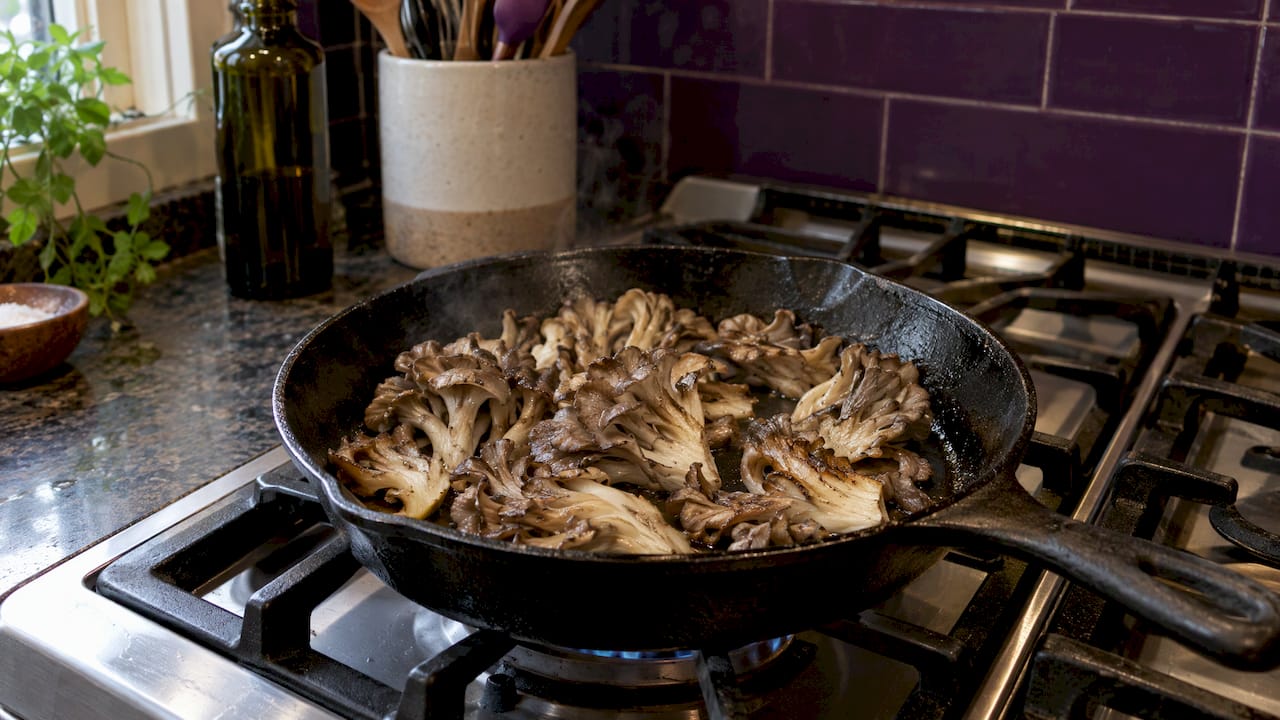 Maitake Benefits: What the Research Shows and What to Check
Maitake benefits explained: nutrients, beta-glucans, one cognitive trial in older adults, safety, medication cautions and
 Absorption vs. Bioavailability: What’s the Difference?
Absorption is how much crosses the gut wall. Bioavailability is how much active compound reaches