
Loading your cart...

You don’t need an expensive concierge clinic to run an effective peptide protocol. The most cost-effective approach starts with three decisions: define one or two specific health goals, select only the peptides that directly address those goals, and lock in your foundational habits before you spend a dollar on peptides. That sequence matters more than any particular peptide stack.
Here’s what a well-built, budget-conscious protocol actually looks like:
- Define your primary goal first. Recovery, metabolic support, and aging support each call for different peptides. Mixing all three from day one inflates cost without improving outcomes.
- Select targeted peptides. BPC-157 for tissue repair, CJC-1295 and Ipamorelin for growth hormone support, GHK-Cu for skin and aging, Thymosin Alpha-1 for immune function, AOD-9604 for fat metabolism. Pick what fits your goal, not what sounds impressive.
- Optimize lifestyle pillars first. Sleep, movement, and nutrition account for the majority of controllable health outcomes. Peptides amplify a solid foundation; they don’t replace one.
- Get a clinical consultation and baseline bloodwork. A CBC, metabolic panel, and vitamin D level before you start protects your investment and your health.
- Budget for the full picture. Peptides, bacteriostatic water, syringes, and periodic lab monitoring all carry costs. Underestimating consumables is the most common beginner mistake.
- Choose clinical-grade over research-grade when possible. The purity difference matters for both safety and efficacy.
- Avoid pre-packaged “stacks.” One-size-fits-all packages routinely include peptides you don’t need, which drives up cost without adding benefit.
What is peptide therapy and why does personalization matter?
Peptide therapy uses short chains of amino acids to send specific signals to your body’s own repair and regulatory systems. Unlike broad-spectrum supplements, peptides work by mimicking or triggering natural biological processes: tissue repair, growth hormone release, immune modulation, and collagen synthesis. The signaling precision of peptides is what separates them from generic wellness products.
The core mechanism is straightforward. Peptides bind to receptors on target cells and trigger downstream responses, whether that’s accelerating tendon healing, stimulating growth hormone pulses, or activating immune T-cells. Because they work through existing biological pathways, they tend to produce fewer off-target effects than synthetic drugs when used correctly.
Personalization isn’t optional here. Physiological needs vary enough between individuals that a protocol built for a 35-year-old athlete recovering from a rotator cuff injury looks nothing like one designed for a 50-year-old managing metabolic slowdown. Generic protocols often include redundant peptides that overlap in function, which wastes money and can complicate monitoring.
What clinical considerations should you address before starting?
Before your first injection, you need baseline data. A standard pre-protocol workup includes:
- Complete blood count (CBC) to rule out underlying conditions that could interact with peptide use
- Comprehensive metabolic panel to assess liver and kidney function
- Hormone panel (IGF-1, testosterone, cortisol) to establish your baseline before adding growth hormone secretagogues like CJC-1295 or Ipamorelin
- Vitamin D level, since deficiency blunts immune and metabolic responses that peptides are meant to support
- Thyroid function if you’re targeting metabolism or body composition
Lab testing before starting gives your provider the data to customize dosing and flag contraindications. Skipping this step is where people run into avoidable problems.
Safe usage also requires ongoing monitoring. Check IGF-1 levels every 8–12 weeks if you’re running CJC-1295 or Ipamorelin long-term. Watch for water retention, joint discomfort, or changes in fasting glucose, all of which signal that dosing needs adjustment. Peptides that support immune function, like Thymosin Alpha-1, warrant periodic immune marker checks if you’re using them for more than a short course.

Which peptides are most commonly used in wellness protocols?
Six peptides show up consistently in functional wellness protocols across recovery, metabolism, and aging support. Each has a distinct mechanism, a typical dosage range, and a specific use case. Knowing what each one does prevents the common mistake of stacking peptides that duplicate each other’s effects.

| Peptide | Primary benefit | Mechanism | Typical dosage | Administration | Key safety notes |
|---|---|---|---|---|---|
| BPC-157 | Tissue healing and recovery | Promotes angiogenesis and growth factor upregulation | — | Subcutaneous or intramuscular injection; oral for gut issues | Generally well-tolerated; avoid in active cancer history |
| CJC-1295 | Growth hormone release, muscle recovery | GHRH analog; extends GH pulse duration | 100–300 mcg, 2–3x/week | Subcutaneous injection | Monitor IGF-1; avoid in active malignancy |
| Ipamorelin | Growth hormone pulse, sleep quality | Selective GHRP; minimal cortisol or prolactin elevation | — | Subcutaneous injection, typically at night | Mild hunger increase; low side-effect profile |
| GHK-Cu | Skin regeneration, anti-aging | Copper peptide; stimulates collagen and wound healing | 1–2 mg/day (injectable); topical varies | Subcutaneous injection or topical | Skin irritation possible with topical; generally safe |
| Thymosin Alpha-1 | Immune modulation | Activates T-cell differentiation and dendritic cells | — | Subcutaneous injection | Well-studied safety profile; used clinically for hepatitis B |
| AOD-9604 | Fat metabolism | GH fragment; stimulates lipolysis without IGF-1 elevation | — | Subcutaneous injection | No significant androgenic effects; minimal side effects reported |
A few things worth noting about this list. BPC-157 supports tissue healing and recovery through its effects on growth factors and blood vessel formation, making it the go-to for injury repair. GHK-Cu aids skin regeneration and aging support through collagen stimulation, which is why it appears in both injectable and topical protocols. CJC-1295 and Ipamorelin are almost always paired because they work on different points of the same growth hormone pathway, producing a stronger combined pulse than either alone.
AOD-9604 is the most misunderstood peptide on this list. It’s a fragment of the growth hormone molecule that targets fat breakdown without raising IGF-1, which makes it useful for metabolic goals without the growth-promoting risks of full GH therapy. Thymosin Alpha-1 has the most established clinical record of the group, having been studied in the context of immune response and viral infections.
How do you design a personalized, cost-effective peptide protocol?
The most expensive mistake in peptide therapy is starting before your lifestyle foundation is solid. Spending on peptides without optimizing sleep, movement, and stress management produces diminishing returns. Peptides amplify what’s already working; they can’t compensate for chronic sleep deprivation or a diet built on processed food.
Once your foundation is in place, build your protocol around a single primary outcome. Here’s a practical sequence:
- Write down one specific goal. “Recover faster from training” is a goal. “Feel better” is not. Specificity determines which peptides belong in your protocol and which don’t.
- Map peptides to that goal only. For recovery: BPC-157 is your anchor. For metabolic support: AOD-9604 with lifestyle changes. For aging and skin: GHK-Cu. For growth hormone support: CJC-1295 paired with Ipamorelin. Resist adding peptides from other categories until you’ve run your primary protocol for at least 8 weeks.
- Schedule a consultation before purchasing. A provider who reviews your bloodwork can tell you whether your IGF-1 is already elevated (which would make CJC-1295 unnecessary) or whether your immune markers suggest Thymosin Alpha-1 would be worth the cost.
- Budget the full cost of a cycle. Peptides themselves are only part of the expense. Bacteriostatic water, insulin syringes, alcohol swabs, and a sharps container add up. Poor storage or reconstitution degrades peptide potency, turning a cheaper purchase into a waste of money. A slightly higher-cost peptide stored and handled correctly is more cost-effective than a bargain product that loses potency in two weeks.
- Consider pairing foundational supplements. Vitamin D3, magnesium, omega-3s, and creatine have strong evidence for longevity support and cost under $50/month combined. Running these alongside your peptide protocol maximizes the return on both.
- Track your markers. Biomarker monitoring at 8-week intervals tells you whether the protocol is working and whether dosing needs adjustment. Without data, you’re guessing.
Pro Tip: CJC-1295 and Ipamorelin are most effective when taken fasted, either before bed or first thing in the morning, to align with your body’s natural growth hormone pulsatility. Dosing at the wrong time of day reduces the impact of each injection and raises your effective cost per result.
A word on discount peptide suppliers: the price difference between a reputable supplier and a cheap one rarely reflects a savings. It usually reflects a difference in purity, storage conditions during shipping, or whether third-party testing was actually performed. Counterfeit or degraded peptides don’t just fail to work; they can introduce contaminants that create new health problems.

Frequently asked questions about peptide protocols
Do peptide protocols actually work, or is this mostly hype?
The evidence base varies by peptide. Thymosin Alpha-1 has clinical trial data supporting its immune effects. BPC-157 has strong animal data and growing clinical interest for tissue repair. GHK-Cu’s role in collagen synthesis is well-documented in peer-reviewed research. CJC-1295 and Ipamorelin have human data supporting growth hormone elevation. AOD-9604 has completed Phase II trials for metabolic applications. The honest answer: the evidence is real but uneven, and results depend heavily on protocol design, dosing, and individual physiology.
What are the main side effects to watch for?
The most common issues are injection-site reactions (redness, mild swelling), water retention with growth hormone secretagogues, and transient fatigue during immune-modulating protocols. Serious adverse events are rare when peptides are sourced cleanly and dosed correctly. The bigger risk is using contaminated or mislabeled products from unverified suppliers, not the peptides themselves.
Do you need a doctor’s supervision to use peptides?
In the US, most injectable peptides are not FDA-approved for general wellness use, though some are available through licensed compounding pharmacies under FDA compounding regulations. Working with a physician or licensed provider protects you legally and clinically. Self-administering without baseline bloodwork skips the step most likely to catch a contraindication before it becomes a problem.
How do you know which peptides are right for your goals?
Start with your bloodwork. If your IGF-1 is already in the upper range, adding CJC-1295 is redundant. If your inflammatory markers are elevated, BPC-157 or Thymosin Alpha-1 may be more useful than a fat-loss peptide. Goal-driven selection based on actual lab data consistently outperforms choosing peptides based on what’s trending in wellness communities.
What safety monitoring is recommended during a peptide protocol?
At minimum: IGF-1 and fasting glucose every 8 weeks if using growth hormone secretagogues, a liver panel at the start and midpoint of any extended protocol, and a general check-in with your provider at 30 days. If you’re using Thymosin Alpha-1 for immune support, periodic lymphocyte counts help confirm the protocol is producing the intended effect.
How Mycelia Link approaches safe sourcing and transparent wellness
Sourcing is where most peptide protocols fail before they start. The difference between a peptide that works and one that doesn’t often comes down to purity, storage, and whether the supplier actually tested what they’re selling.
Mycelia Link’s approach to quality starts with third-party testing on every product. That means an independent lab verifies purity and potency before anything reaches a customer, not just a certificate of analysis from the manufacturer’s own facility. The distinction matters because in-house testing has an obvious conflict of interest.
Here’s what to look for when evaluating any peptide supplier:
- Third-party certificates of analysis (COAs) from an independent, accredited laboratory, not the manufacturer’s internal lab
- Batch-specific testing, not a generic COA that applies to an entire product line
- Clear labeling of peptide concentration, reconstitution instructions, and storage requirements
- Transparent sourcing information about where the peptide was synthesized
- No vague proprietary blends that obscure what you’re actually buying
- Responsive customer support that can answer technical questions about purity and handling
Mycelia Link also provides educational resources that go beyond product descriptions. Understanding how to source research peptides safely and how to evaluate a supplier’s quality claims are skills that protect your investment regardless of where you ultimately purchase. The goal is an informed customer, not a dependent one.
Pro Tip: When reviewing a supplier’s COA, check that the testing date matches the current batch and that the lab name is searchable and accredited. A COA dated two years ago for a “current” product is a red flag, not a trust signal.
Mycelia Link’s commitment extends beyond peptides. The brand’s non-profit apparel line supports reforestation, and a portion of proceeds goes directly to environmental restoration. For people who care about where their money goes beyond their own health, that context matters.

Ready to build a protocol grounded in real quality? Explore Mycelia Link’s research peptide catalog and the 2026 peptide wellness research guide to find the products and education that match your specific goals.
Key Takeaways
A well-designed, affordable peptide protocol starts with foundational health habits, uses goal-specific peptide selection, and requires clinical consultation and quality sourcing to deliver real results.
| Point | Details |
|---|---|
| Foundation before peptides | Sleep, movement, and nutrition produce the highest health impact before any peptide is added. |
| Goal-driven peptide selection | Choosing only the peptides that match your specific outcome avoids redundancy and lowers cost. |
| Clinical consultation required | Baseline bloodwork including CBC, metabolic panel, and IGF-1 informs safe, personalized dosing. |
| Budget for consumables | Bacteriostatic water, syringes, and storage supplies are required costs; skipping them degrades peptide potency. |
| Source from verified suppliers | Third-party tested, batch-specific COAs from accredited labs are the minimum standard for safe peptide sourcing. |
Recommended
Categories:
Related Posts
 6 Step Regulatory Checklist to Verify Country of Origin for Supplements
Learn what "country of origin" actually means for supplements, why "Made in USA" can mislead,
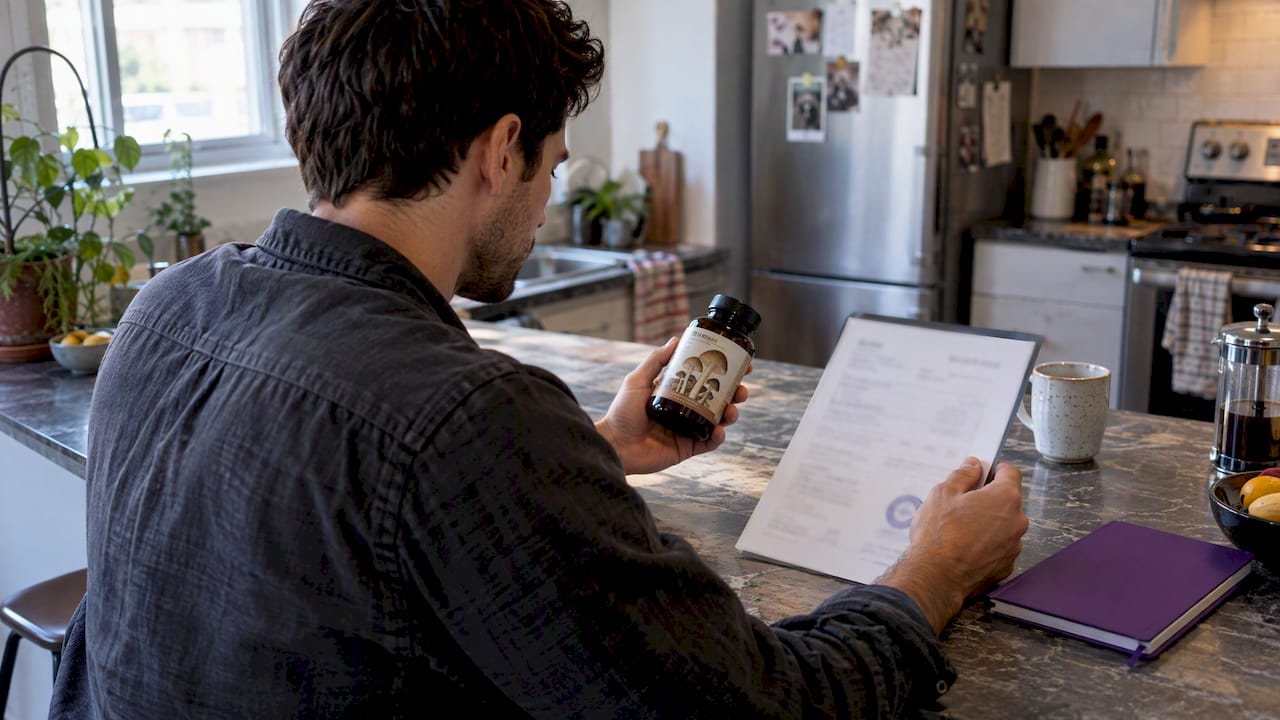 Buyers: Demand These 8 COA Proofs for Mushroom Supplement Purity
Follow eight lab-backed COA checks buyers must demand before purchasing mushroom supplements: lot-matched COAs, beta-glucan
 Local Infrastructure Decides Compostable vs Recyclable Packaging
Decide by what your community can actually process. Learn when certification matters, contamination risks, and